When do human remains become art? I considered this question as I walked through the Paris Catacombs in 2023. It was the second time I had visited, so I knew what to expect, but the impact of so many bones, so many lives, was still strong.
Watch a short video of my visit, with history and tips for yours (3 minutes):


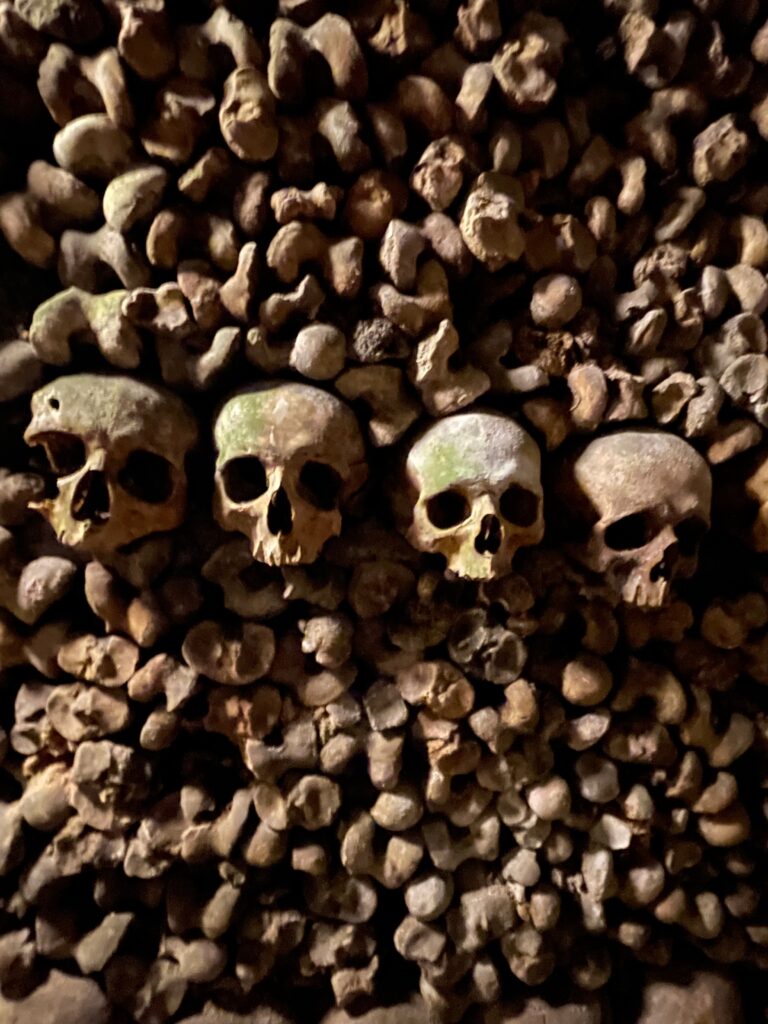
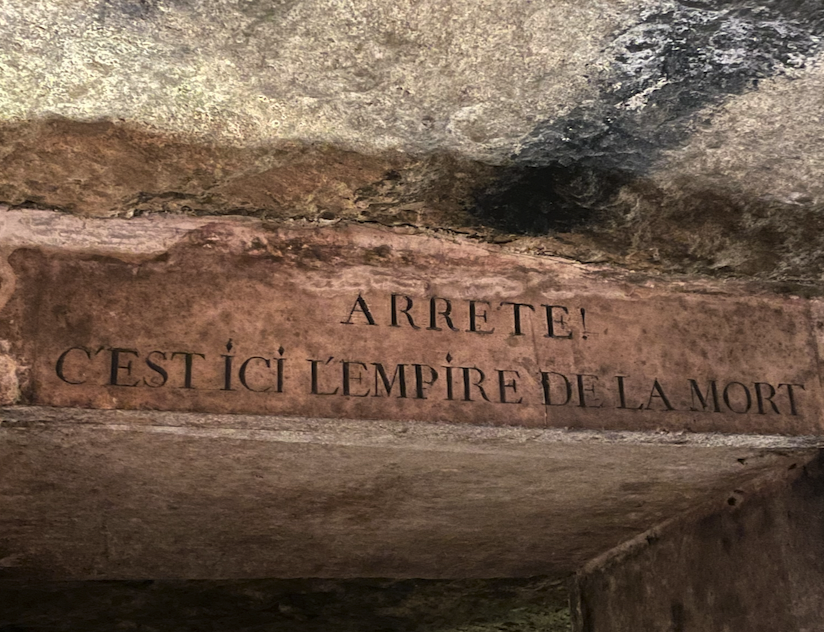
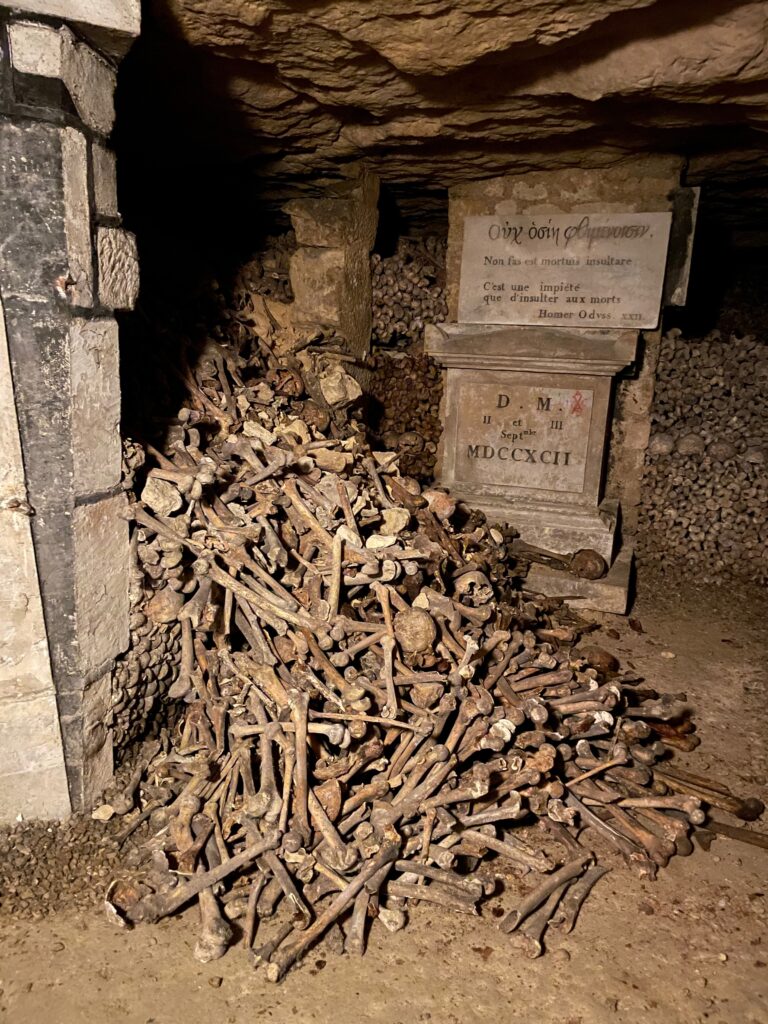
The Paris Catacombs hold the remains of more than six million people, moved there to free up the overcrowded cemeteries above. Each section is labeled with the name of the cemetery that the bones were moved from.
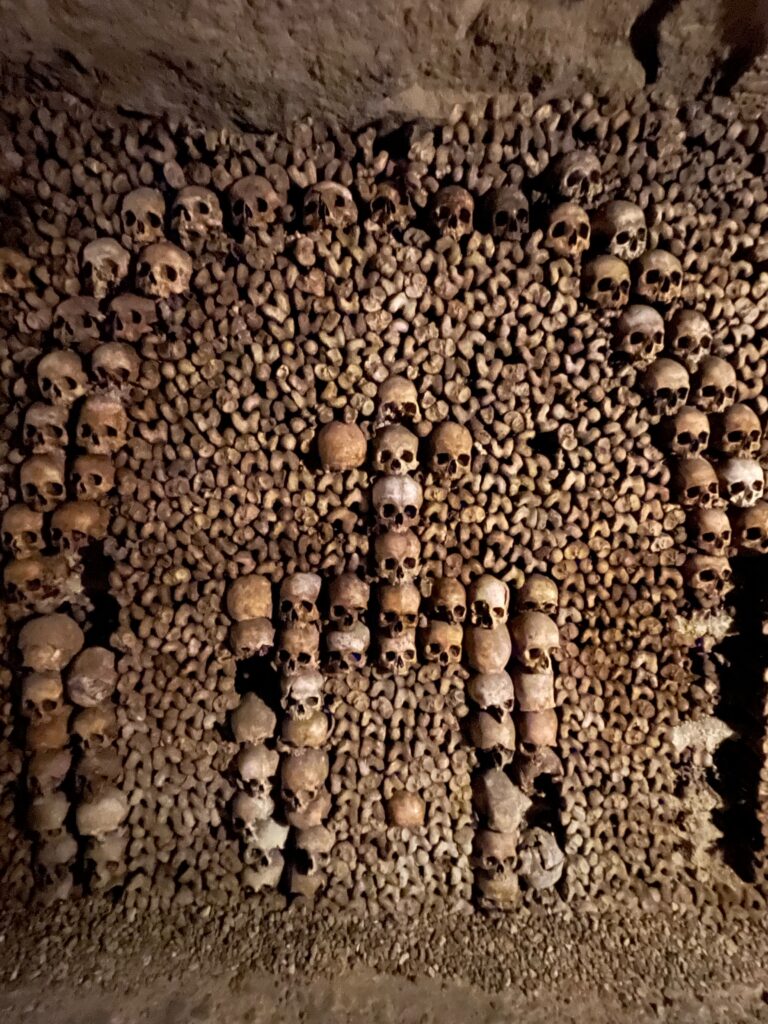
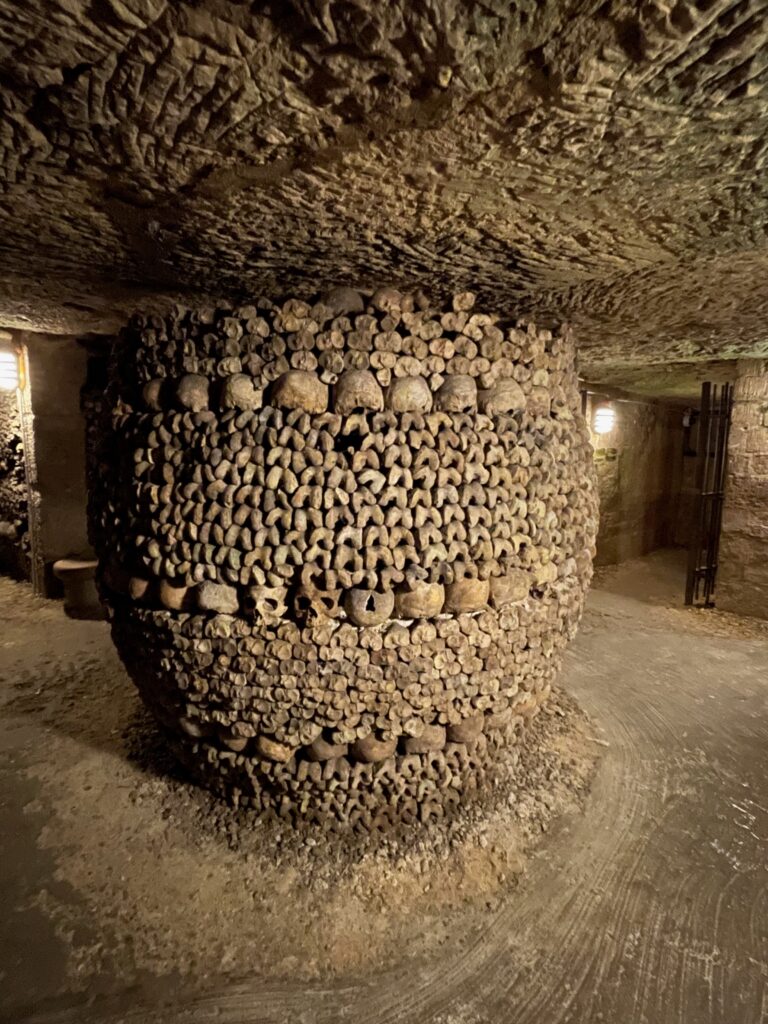
While there are piles of bones in some places, most are concealed behind patterns of femurs and skulls, arranged in a form of macabre beauty down there in the dark.
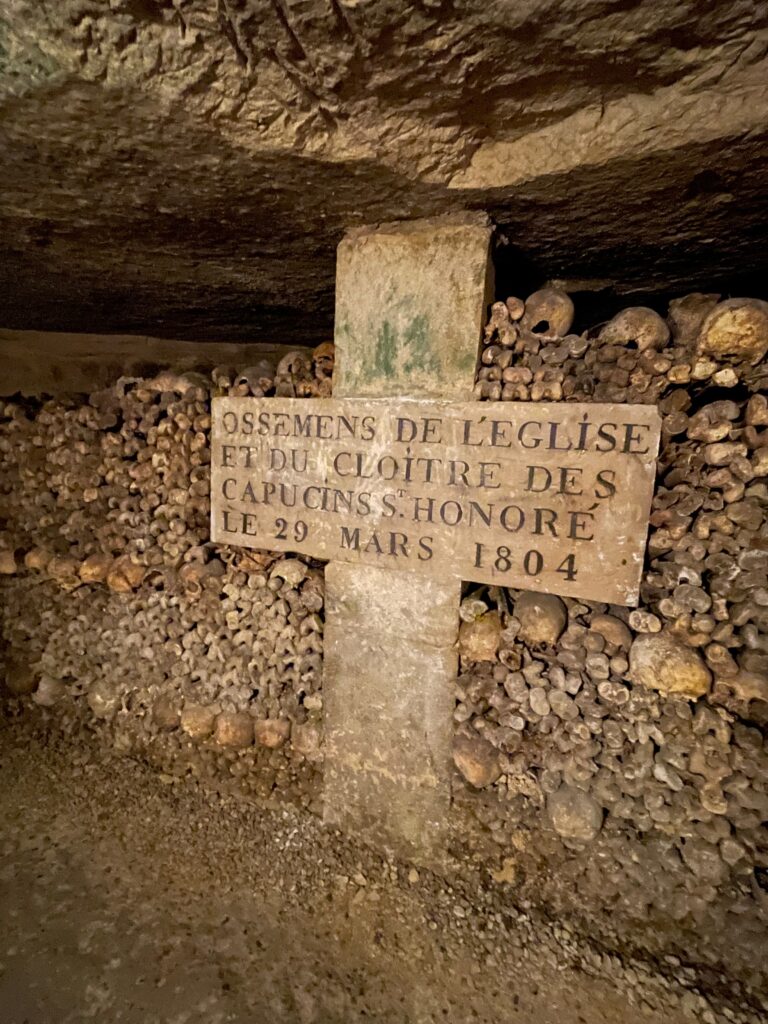
The bones have even been turned into architecture in this pillar deep within the tunnels.
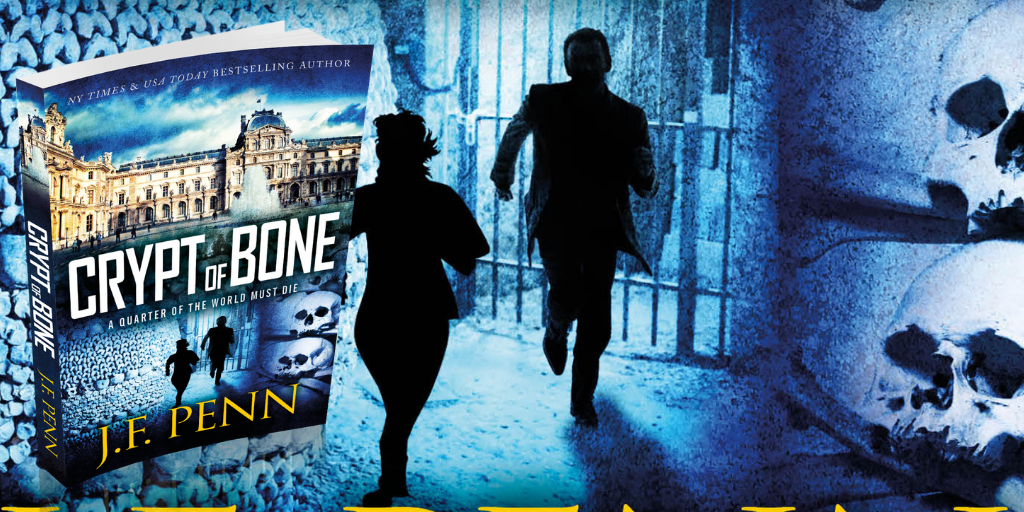
My previous trip inspired my thriller Crypt of Bone, which also features the Palermo and Sedlec Ossuaries. I wonder what this trip might inspire …

Practicalities:
Book online in advance, although bookings don’t go live until a week or so before each date, so you need to be organized if you have a specific window to visit. I had a reminder in my calendar to book and still couldn’t get the exact slot I wanted.
The entrance is right next to the Denfert-Rochereau Metro. If you have time before and fancy some wonderful food, check out nearby Rue Daguerre which is a wonderful pedestrianized boulevard with lots of options and an outdoor market at weekends. It’s also close to Montparnasse Cemetery which is beautiful and peaceful.
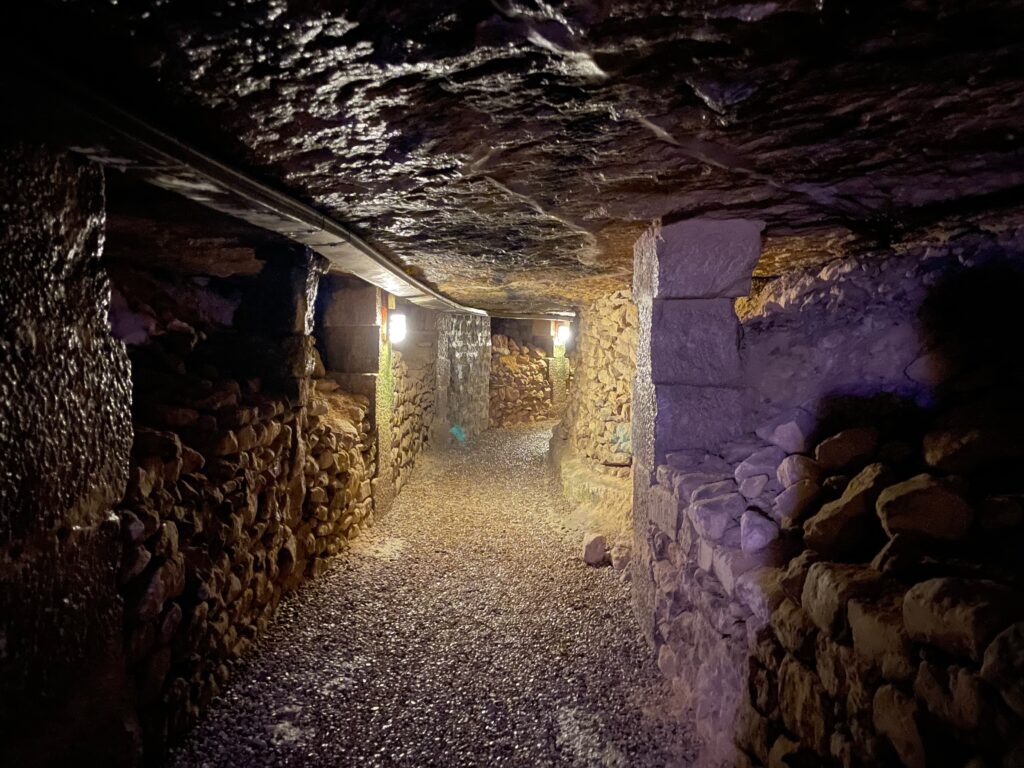
This is not an accessible experience! There are spiral steps to go down, and then you walk through uneven corridors for about one and a half kilometres, and then climb back up a spiral staircase to get out again. If you have mobility issues, or struggle with stairs, or don’t like underground tunnels, this is not for you! The exit is 21 Bis Av. René Coty, 75014 Paris, France. You can find it on Google Maps if you search for the Catacombs Shop.

Paris Catacombs FAQ
What are the Paris Catacombs?
The Paris Catacombs are an underground ossuary beneath the 14th arrondissement of Paris, created in old limestone quarry tunnels. The visitor route is a circuit of about 1.5 kilometres, around 20 metres below the streets.
Why are there so many bones in the Paris Catacombs?
By the late 18th century, the cemeteries of Paris were so overcrowded that they had become a public health hazard. From 1785, the remains from Saints-Innocents, the city’s largest cemetery, were moved into the old quarries, and the site was consecrated as the municipal ossuary in 1786.
Transfers from other cemeteries continued on and off until the 1860s as the city was rebuilt. Each section is labelled with the name of the cemetery the bones came from.
How many people are in the Paris Catacombs?
The catacombs hold the remains of more than six million people.
Do people live in the Paris Catacombs?
No. The visitor route is only a small part of a much larger network of old quarry tunnels under Paris. Entering the rest of the network has been illegal since 1955, although urban explorers known as cataphiles still find their way in.
How long does a visit take?
Plan for about an hour. There are 131 steps down and 112 steps back up, and it’s around 14°C underground all year, so bring a layer. The catacombs have been open to visitors since 1809.
Do you need to book tickets?
Yes, book online in advance through the official Paris Catacombs website, as time slots sell out.
Books that feature catacombs and ossuaries
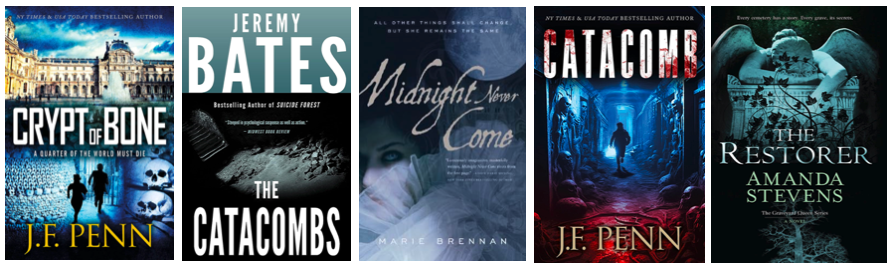

- Crypt of Bone — J.F. Penn. Fast-paced thriller. Morgan and Jake race against time to stop a rogue billionaire from killing a quarter of the world. Features the Paris Catacombs, Sedlec Ossuary, and Palermo Ossuary.
- The Catacombs — Jeremy Bates. Horror novel about a serial killer who uses the catacombs under Paris as his hunting ground.
- Midnight Never Come — Marie Brennan. In hidden catacombs beneath London, a second Queen holds court: Invidiana, ruler of faerie England, and a dark mirror to the glory above.
- Catacomb — J.F. Penn. Walker Kane didn’t believe in monsters. Until they took his daughter.
- The Restorer — Amanda Stevens. Supernatural thriller series featuring a graveyard restorer exploring mausoleums and tombs.