

There are some places you walk into and feel a special kind of atmosphere. Durham Cathedral is one of those places (and I certainly don’t say that about every cathedral!) I hope you enjoy this virtual tour.
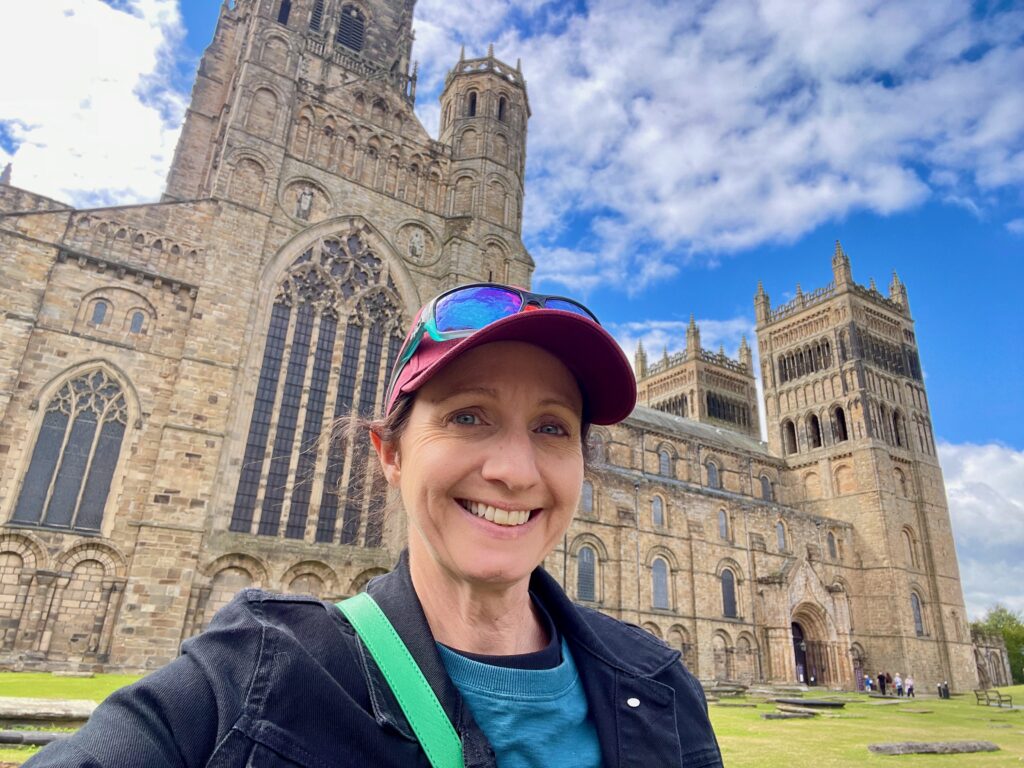
Durham Cathedral stands on a rocky peninsula in a tight loop of the River Wear. It’s a UNESCO World Heritage Site (inscribed 1986) together with Durham Castle, recognised as an outstanding example of Norman (Romanesque) architecture and for its influence on the development of Gothic.

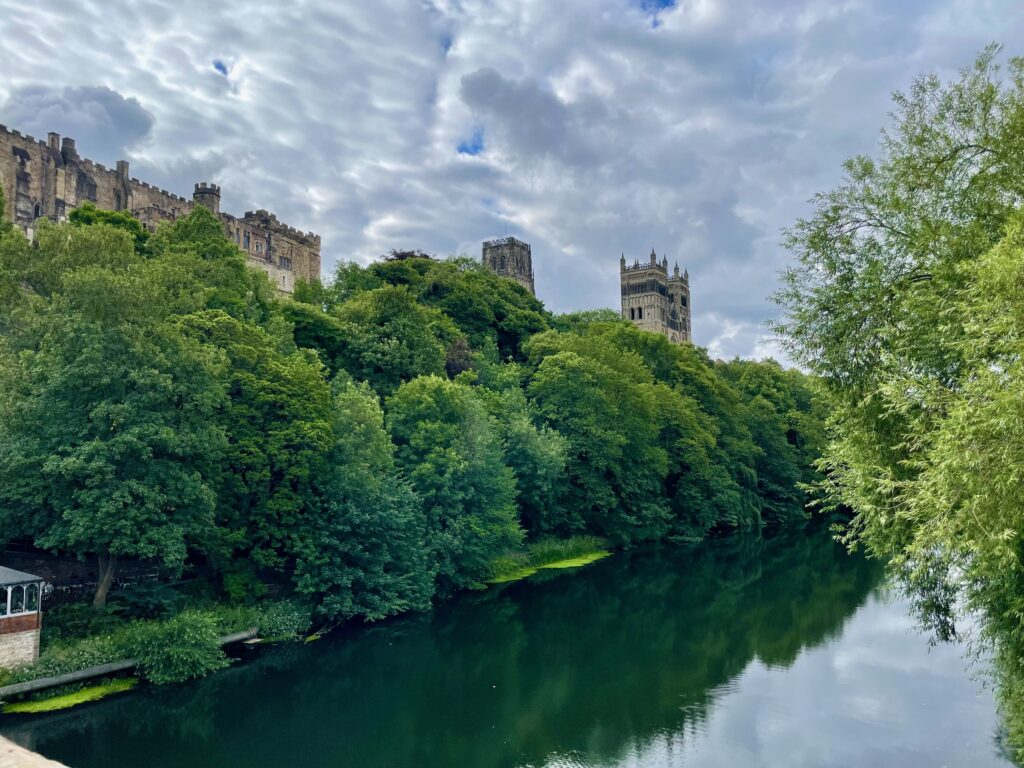
Construction began in 1093 for a new Benedictine monastery to house the relics of St Cuthbert and attract pilgrims.


The massive alternating piers, the great round cylindrical columns incised with chevrons, spirals and lozenges, are a hallmark of Norman decorative masonry.
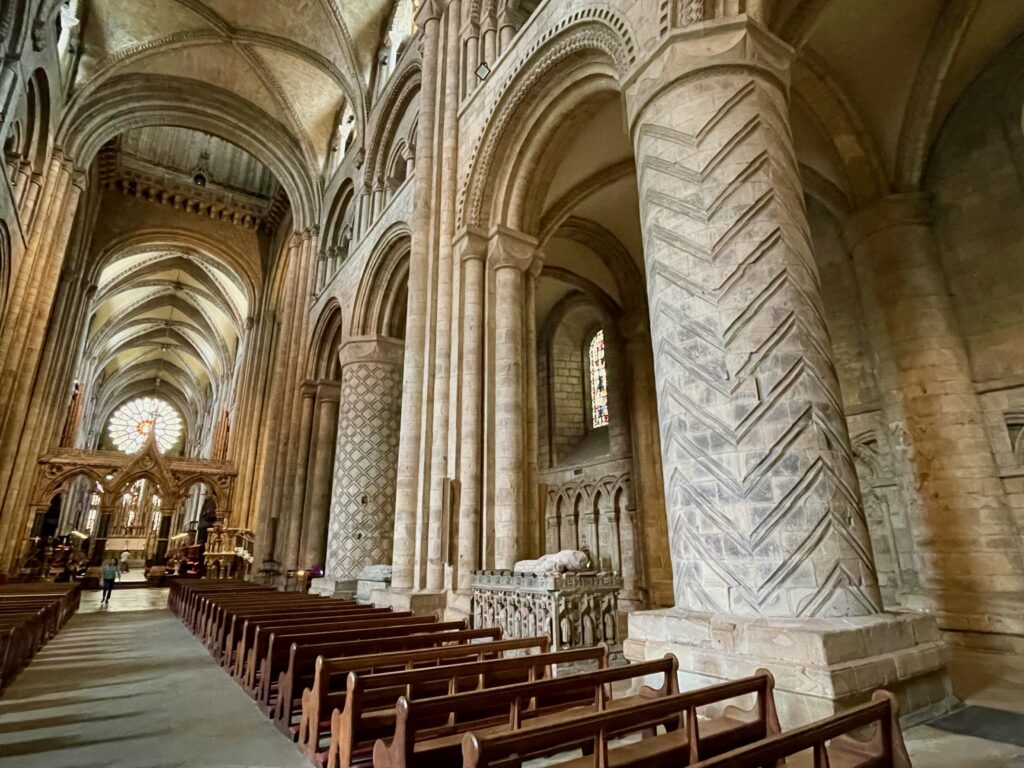
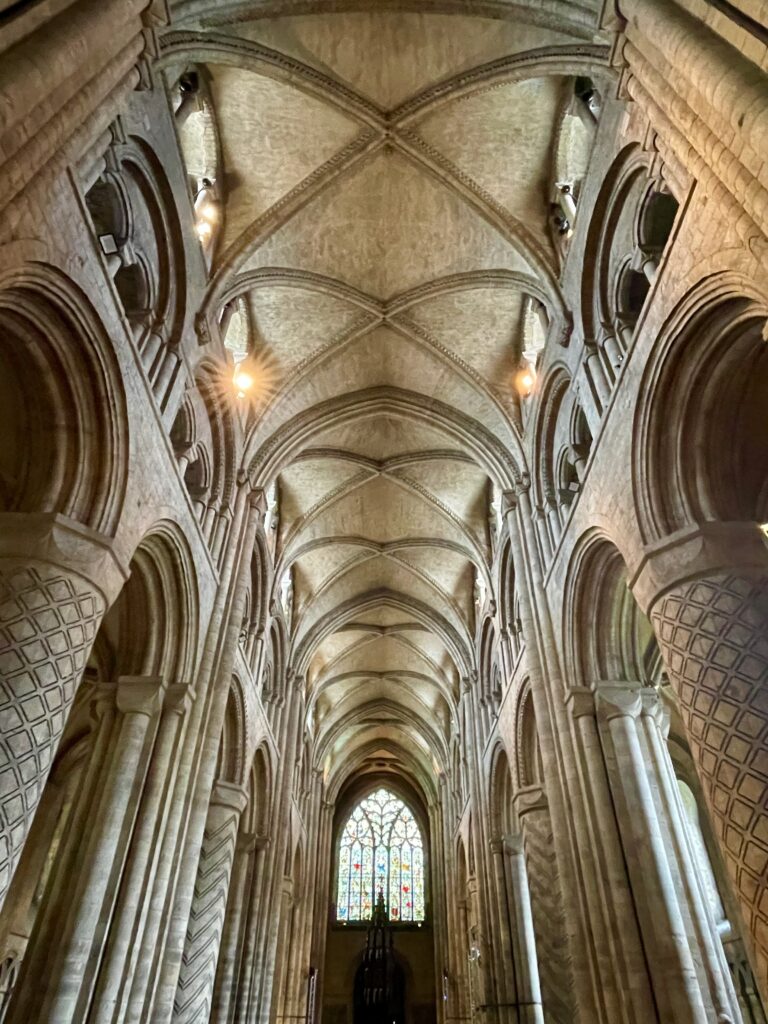
The nave has some of the earliest large-scale stone rib vaults in Europe, with pointed transverse arches, a key aspect of Gothic architecture.
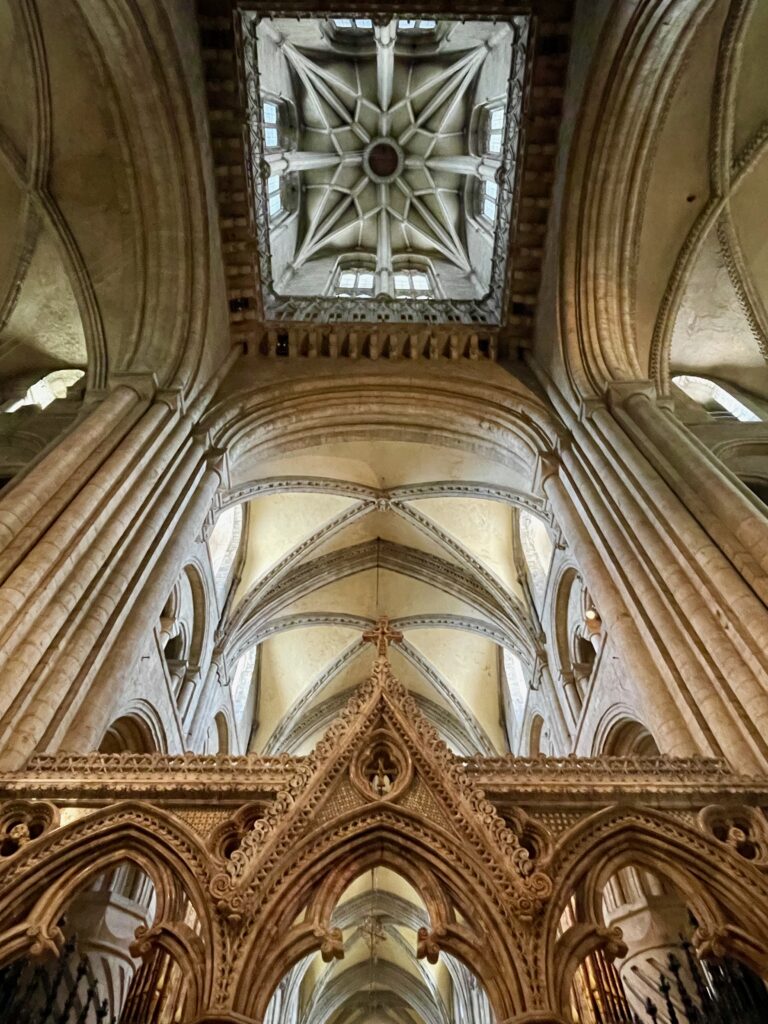
Looking up to the crossing, facing the Quire.
St Cuthbert’s remains were brought to Durham in 995 and translated to a new shrine in 1104. His tomb remains behind the high altar, although the medieval shrine was destroyed at the Reformation.
I lit a candle at the shrine in memory of my crossing to Lindisfarne at the end of the St Cuthbert’s Way (in my book Pilgrimage).
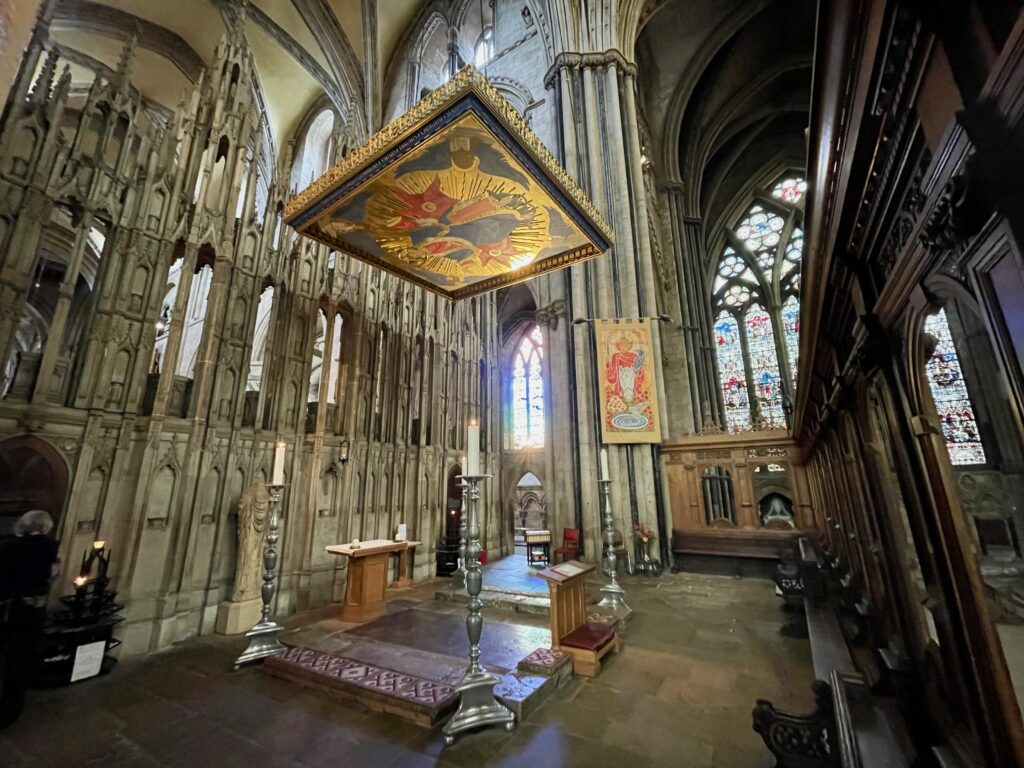
Fragments of St Cuthbert’s Anglo-Saxon oak coffin (AD 698), carved with runic and Roman-letter inscriptions, were recovered in 1827 and 1899. They’re reconstructed and displayed in the Treasures of St Cuthbert inside the 14th-century Great Kitchen. No photos allowed there.
The Galilee Chapel at the west end (late 12th century) houses the tomb of the Venerable Bede. The Galilee Chapel preserves traces of medieval polychromy—painted patterning on its slender columns—rare survivals that hint at the cathedral’s original colour.
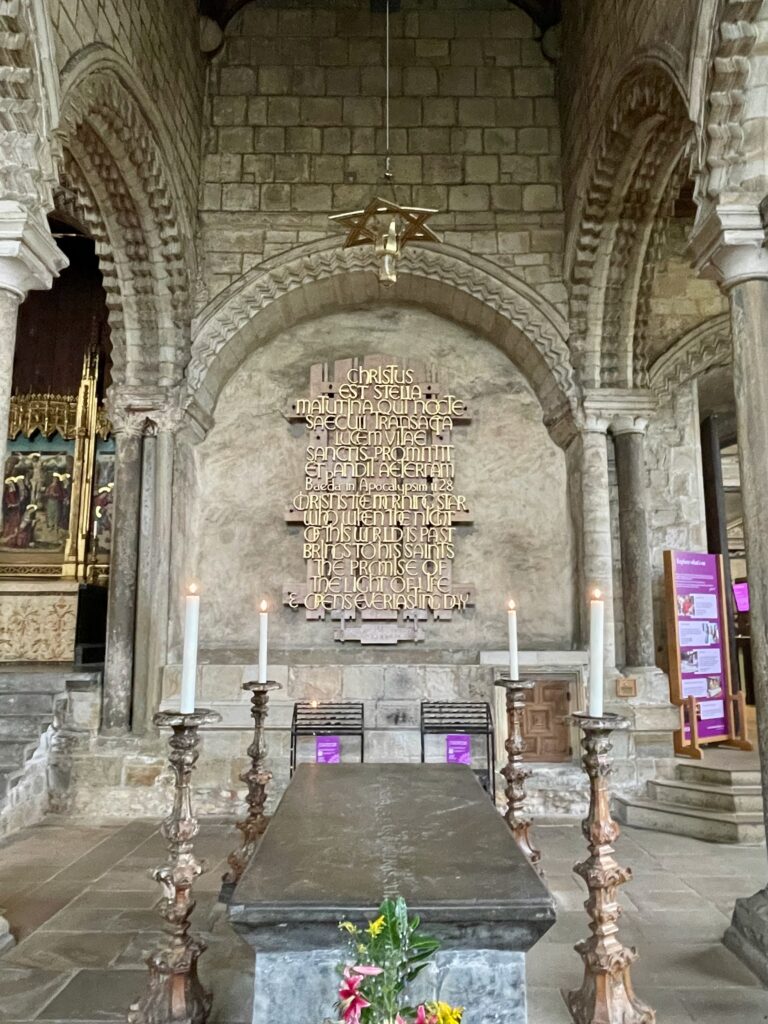
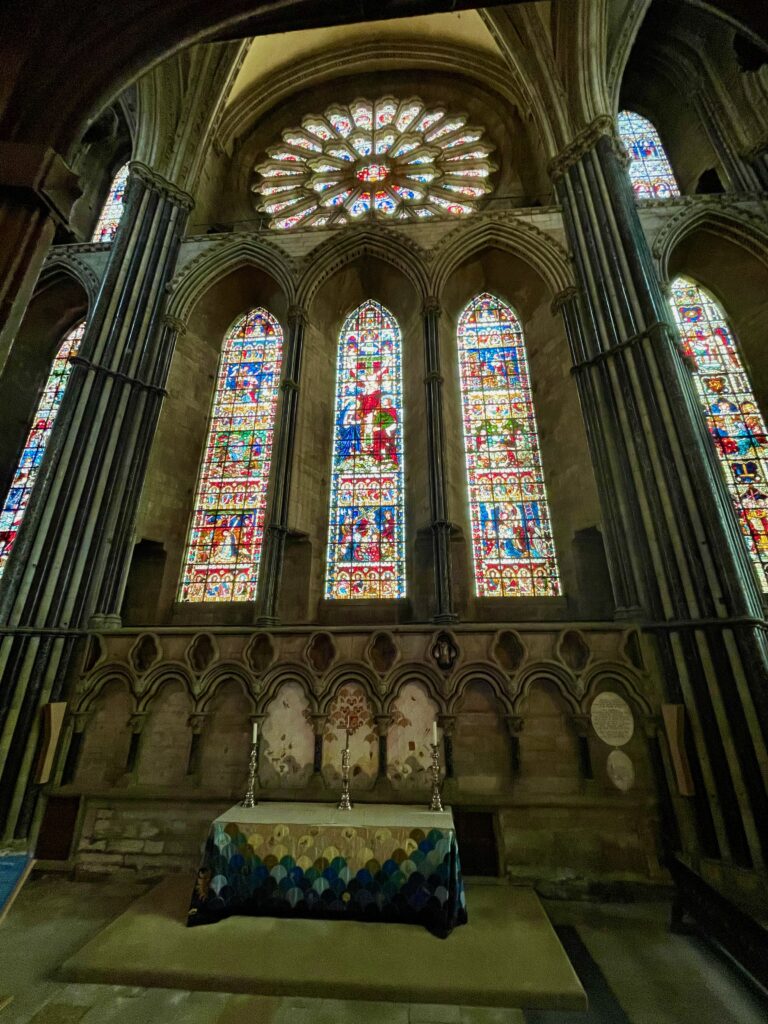
The Chapel of the Nine Altars (mid-13th century) extends the east end in a fully Gothic style, creating space for multiple side altars to serve the crush of pilgrims. The Chapel of St Aidan is one of the chapels at the east end.
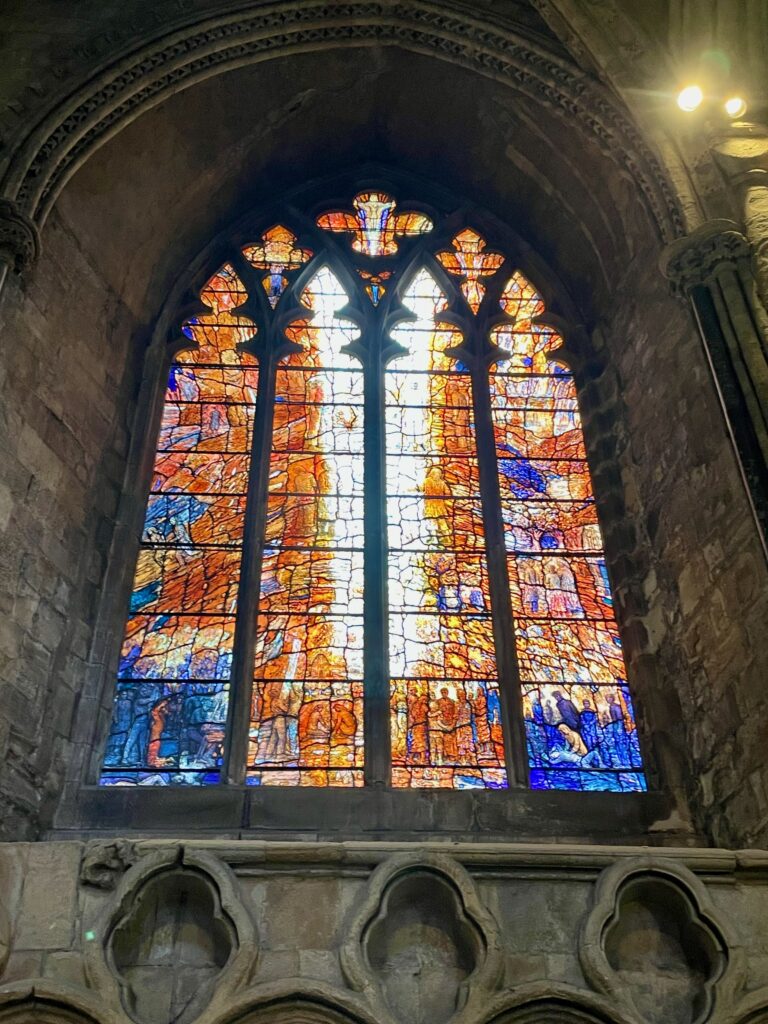
I much prefer modern glass to the medieval stained glass, so I appreciated The Transfiguration Window (below), gifted by the Friends of Durham Cathedral in honour of Michael Ramsey (1904-1988) who was bishop of Durham and Archbishop of Canterbury.
Located far down the South Quire Aisle (south wall), it shows Christ radiant with Moses and Elijah, and weaves in Durham’s heritage. Pilgrims approach the cathedral (one resembling Ramsey) and St Cuthbert prays on Inner Farne island, rendered with silver staining, hand painting, and acid-etched layers.
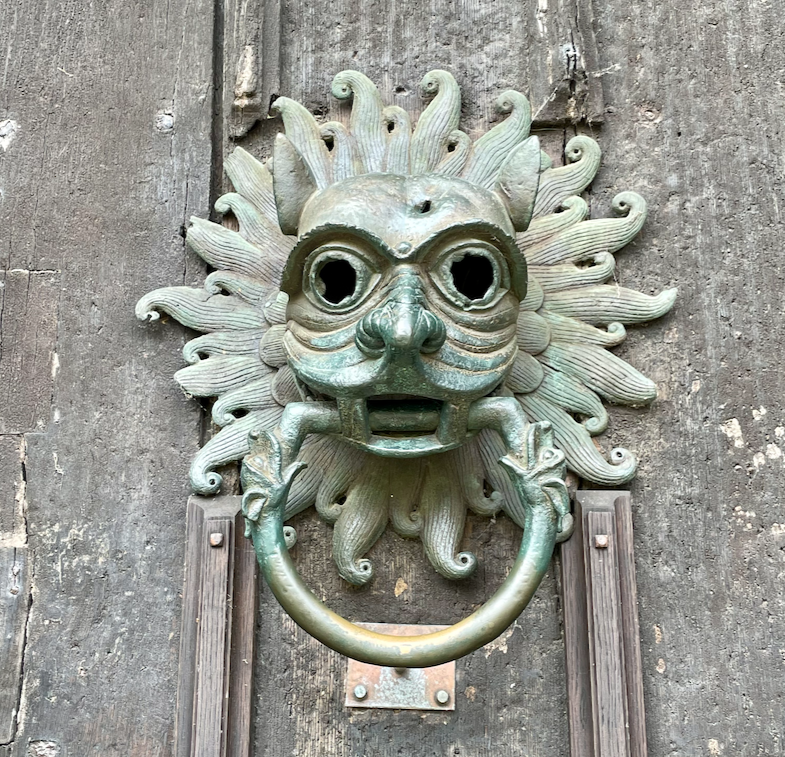
The famous Sanctuary Knocker on the north door (the original is in the cathedral museum) signified Durham’s medieval right of sanctuary: fugitives who grabbed it could claim temporary protection while their case was arranged.

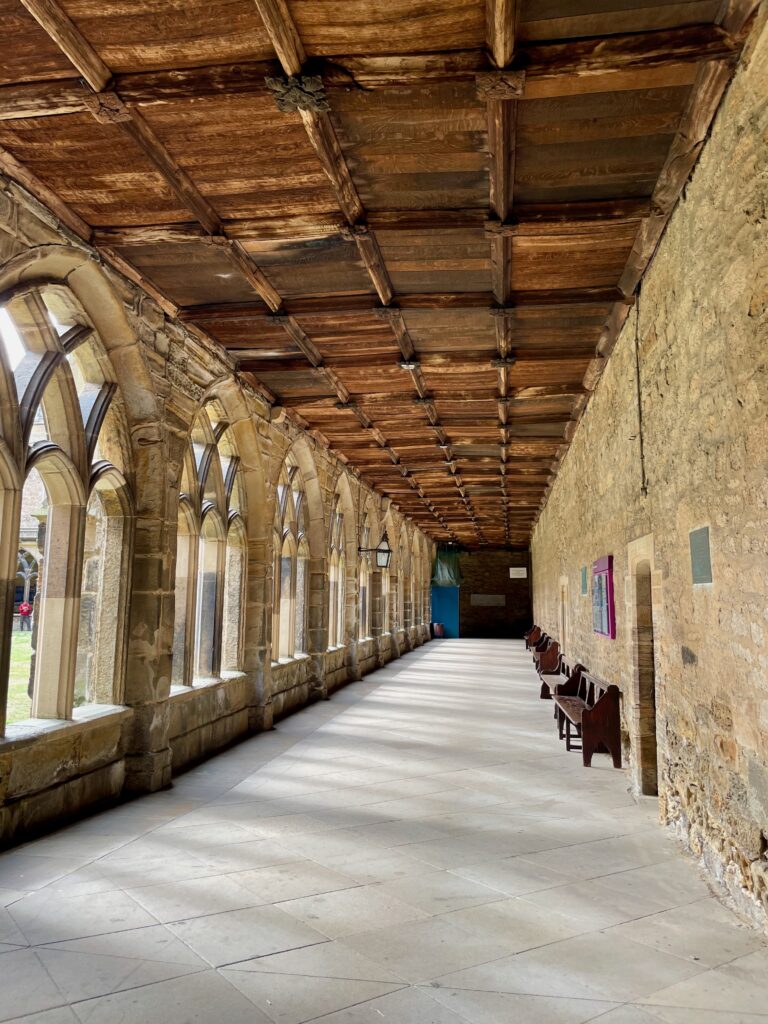
The Cloisters linked the buildings where monks once read, wrote, and studied, to the cathedral. Laid out in the late 12th century and remodelled in the early 15th, the oak-panelled ceilings are medieval.
I loved this little angel roof boss in the Cloisters!


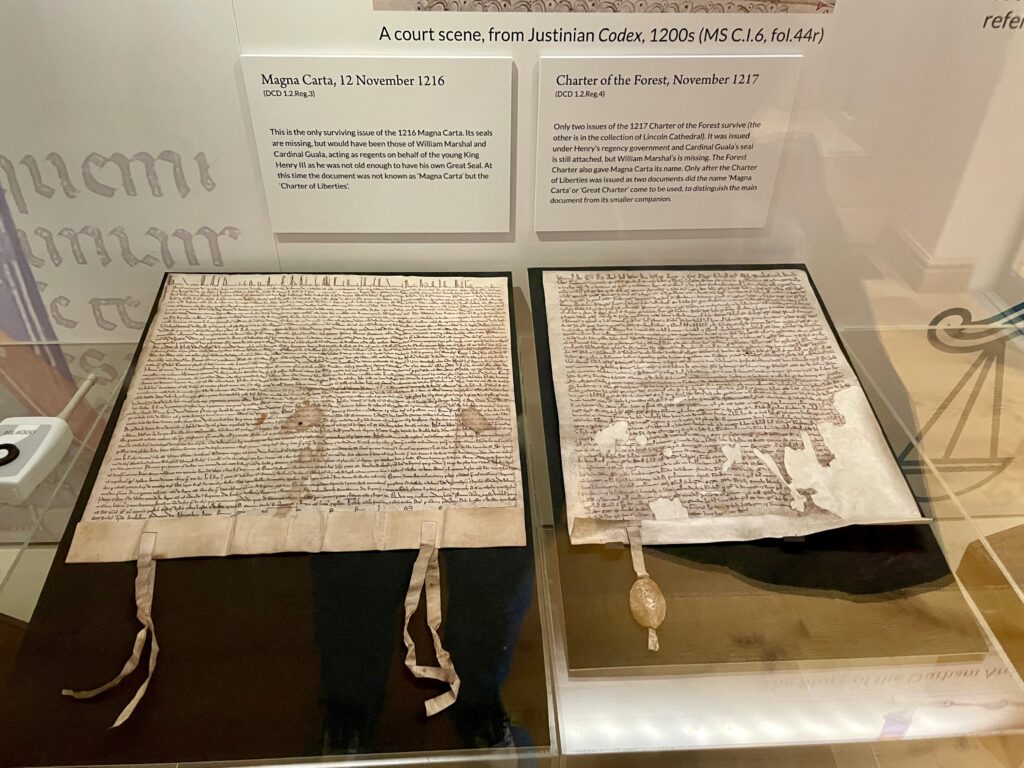
Durham Cathedral’s archives hold early 13th-century copies of Magna Carta and the Charter of the Forest, displayed periodically in the museum. They were on display when I visited.
I loved my visit to Durham Cathedral. I hope you have a good trip if you visit!
Books about or set in Durham

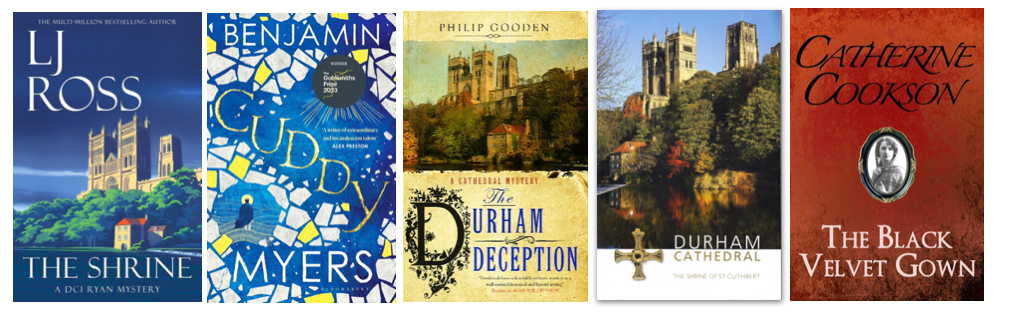
- The Shrine — LJ Ross. Crime thriller. Chaos descends on the sleepy, historic city of Durham and, when the smoke clears, a priceless artefact that once belonged to Saint Cuthbert is missing. With tensions running at an all-time high, unable to trust the local police, can DCI Ryan and his team bring a killer to justice — and restore Cuthbert’s cross to its natural resting place? You can also listen to an interview with the author, LJ Ross, about how Northumberland inspires her books.
- Cuddy — Benjamin Myers. A bold and experimental retelling of the story of the hermit St. Cuthbert, unofficial patron saint of the North of England. Incorporating poetry, prose, play, diary and real historical accounts to create a novel like no other, Cuddy straddles historical eras – from the first Christian-slaying Viking invaders of the holy island of Lindisfarne in the 8th century to a contemporary England defined by class and austerity.
- The Durham Deception — Philip Gooden. For the newly-weds Tom and Helen Ansell life is no honeymoon, as they are drawn into a murky underworld of Victorian spiritualism and stage magic when they’re sent on a mission to the stunning cathedral city of Durham.
- Durham Cathedral: The Shrine of St Cuthbert — This beautifully illustrated guide introduces the reader to the glories of Durham, and features the newly opened ‘Open Treasure’ exhibition.
- The Black Velvet Gown — Catherine Cookson. Durham in the 1830’s. The compelling story of a mother and daughter, often at odds with each other, facing the need to challenge and fight the prejudices of an age.