
I often write thrillers about religious relics, so when I need a research trip, I look for cities with saints in their churches and blood in their history. Bruges has both, and a relic of the True Cross and a phial of Holy Blood besides.
I visited in early July 2026, the middle day of a long weekend based in Brussels, with the Eurostar from London to Brussels taking under two hours and the train on to Bruges about an hour more.
Bruges’ entire medieval centre is a UNESCO World Heritage Site, compact enough to cross on foot in twenty minutes, and every street seems to end in step gables and hanging baskets. Walk with me through the city in the photos below.
We started at St Saviour’s Cathedral, the city’s oldest parish church, by tradition founded by St Eligius around 646 and elevated to cathedral status in 1834 after French revolutionaries demolished the old cathedral of St Donatian.
St Saviour’s Cathedral
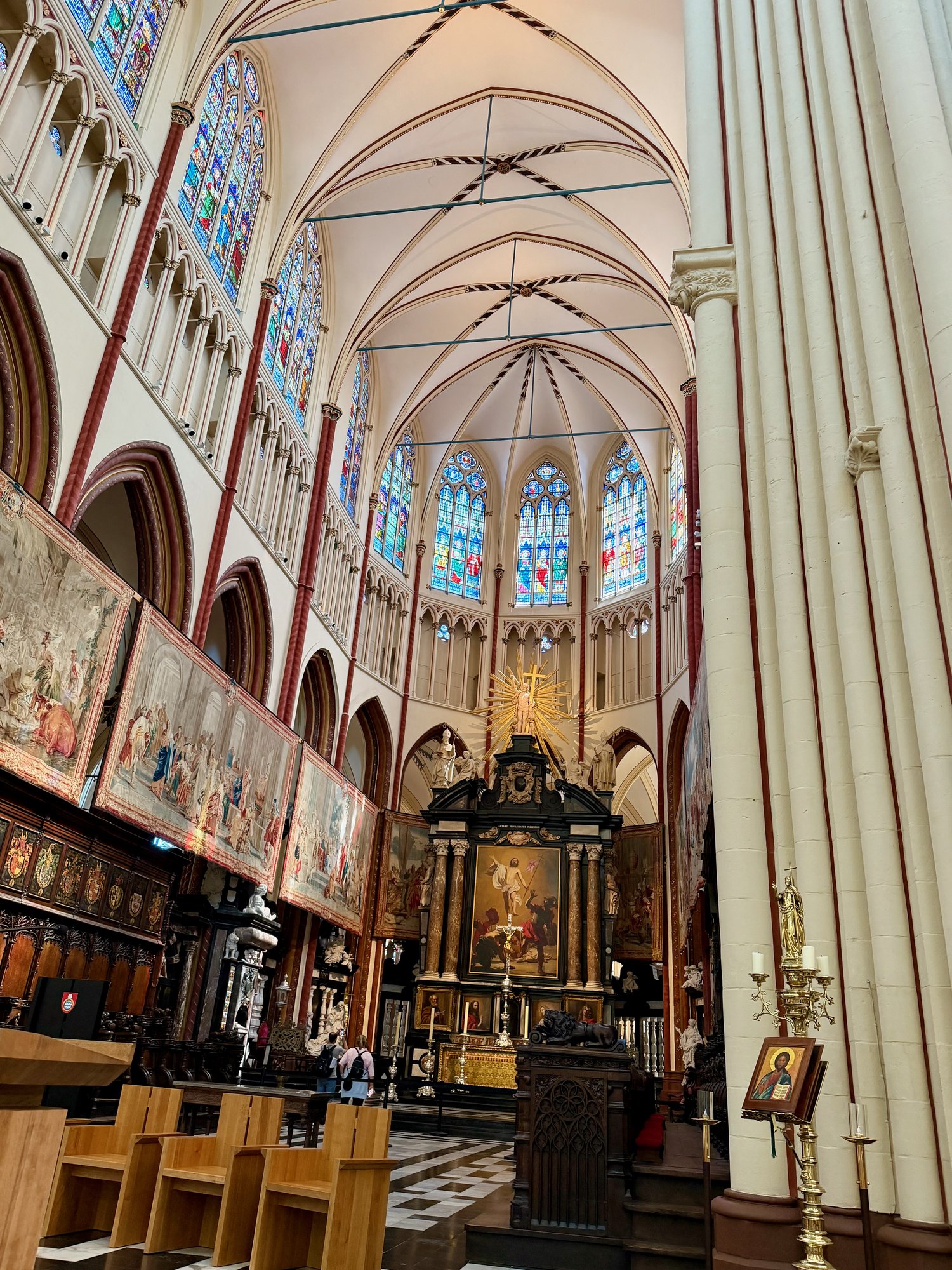
The choir is hung with a series of tapestries on the life of Christ, woven in Brussels around 1730 for St Donatian’s and moved here after the French occupation.
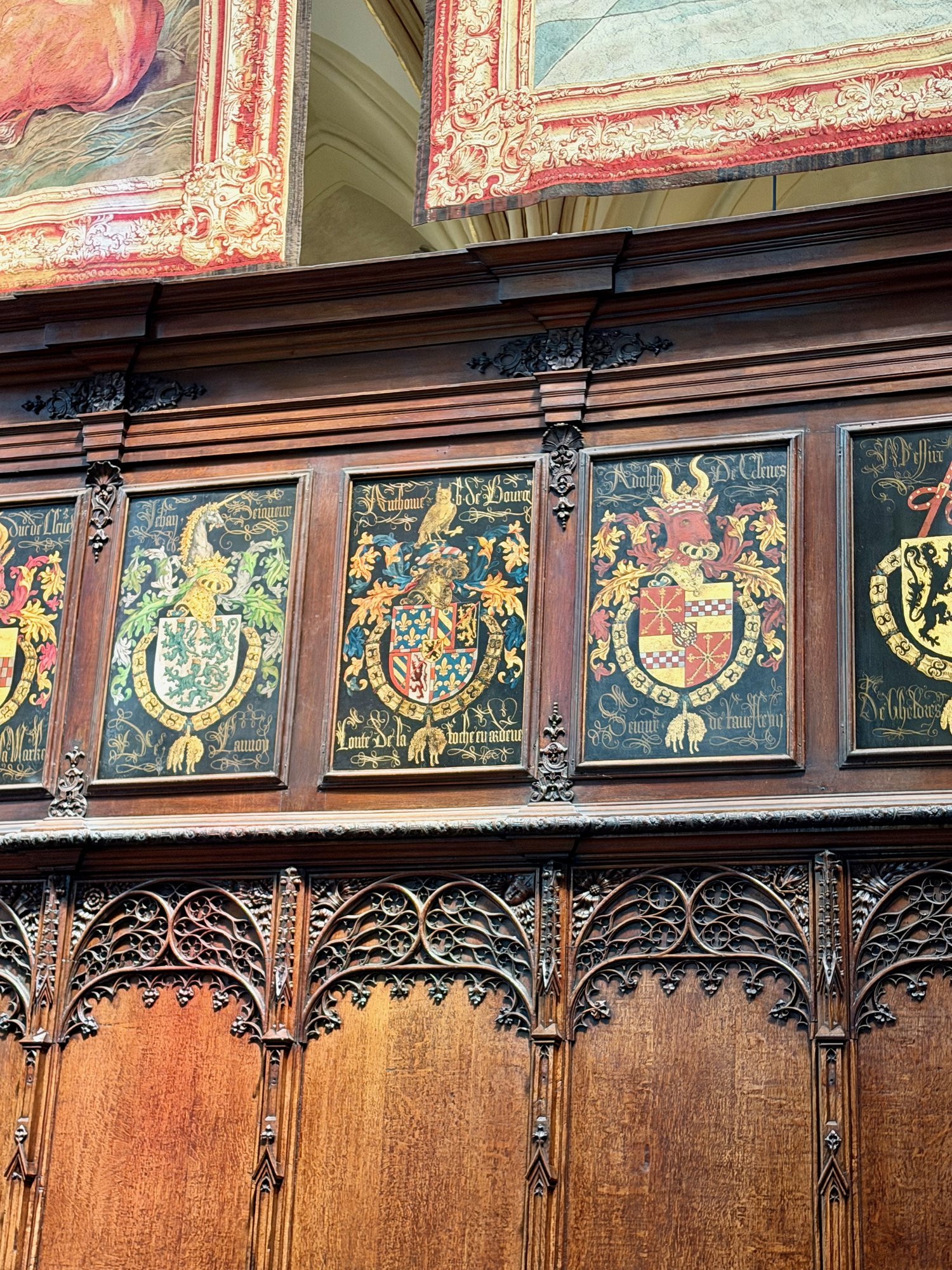
Above the fifteenth-century oak stalls hang the coats of arms of the Knights of the Golden Fleece, painted for the Order’s thirteenth chapter, held in this church in 1478. That year Maximilian of Austria, the new husband of Mary of Burgundy, was installed as Sovereign of the Order here. The arms of knights who had died hang with the single word trespassé.
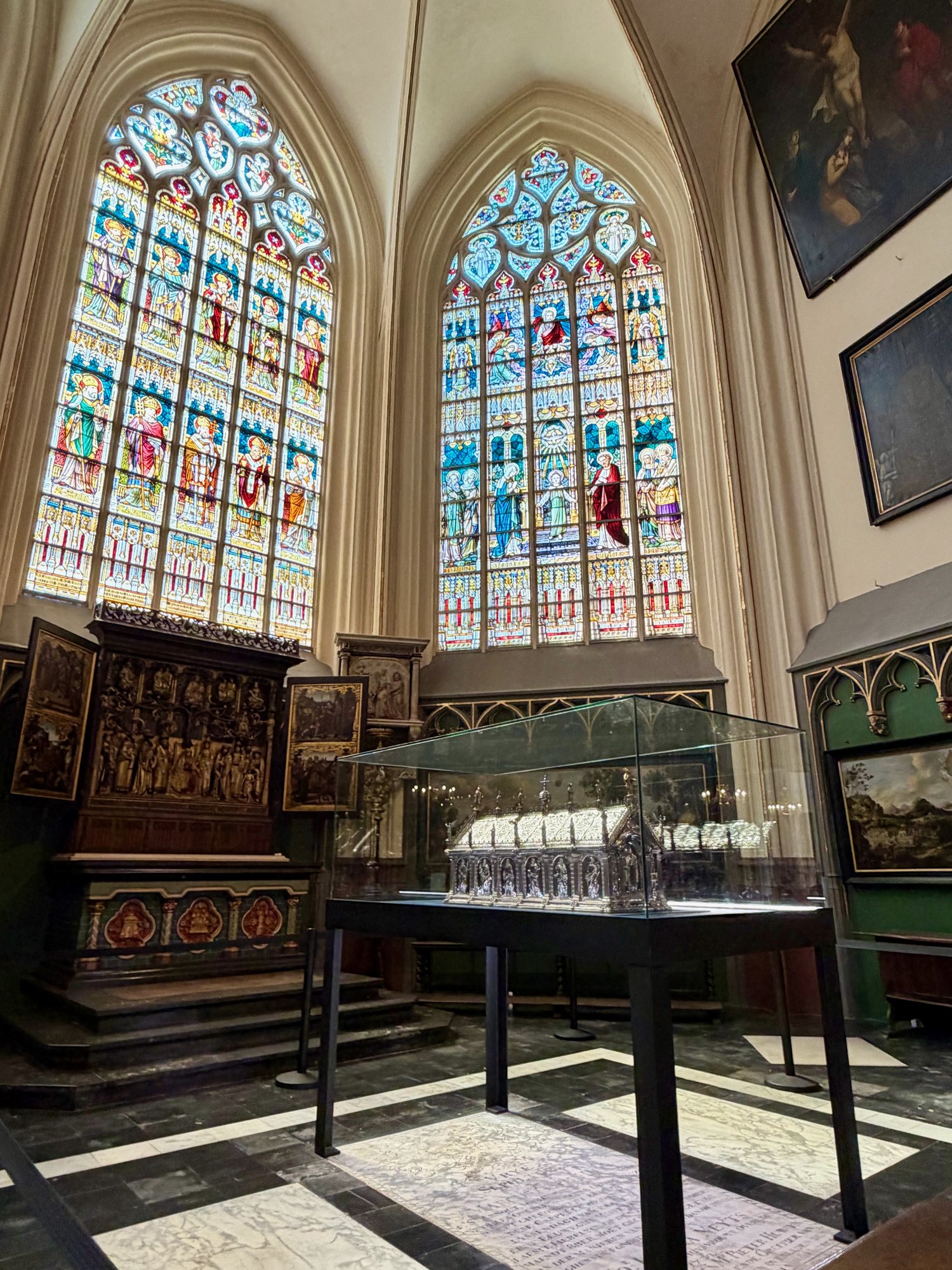
In a side chapel stands the silver shrine of St Eligius, made by the Bruges goldsmith Jan Crabbe in 1612 to hold the saint’s relics, which had been hidden from the iconoclasts.
The same goldsmith family made the great shrine of the Holy Blood a few years later. Bruges took its reliquaries seriously, and still does.
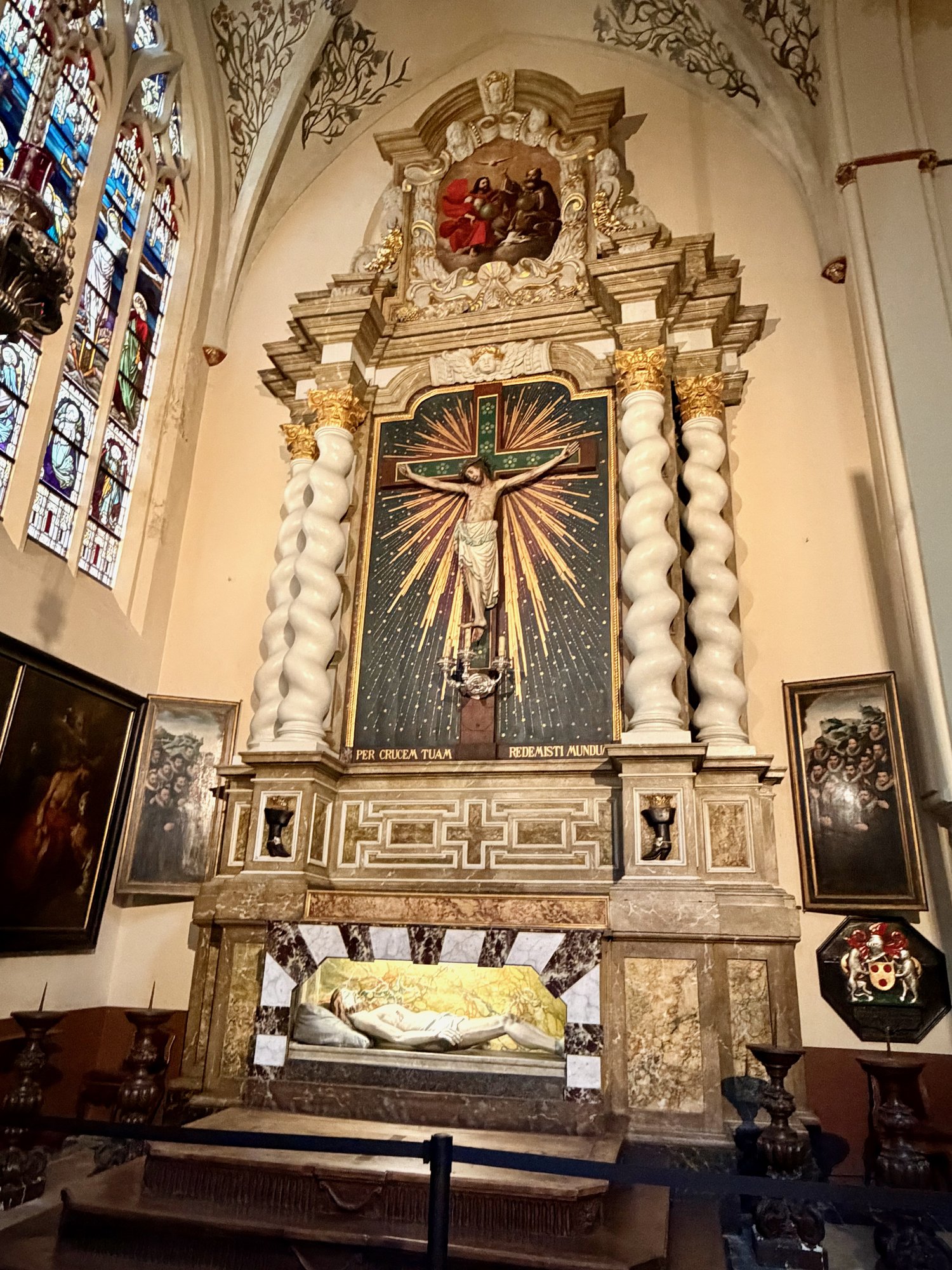
Another side altar holds a carved crucifix against a starburst, with the inscription PER CRUCEM TUAM REDEMISTI MUNDUM, By your cross you have redeemed the world, from the Good Friday liturgy.
Below the altar table, behind glass, lies a life-sized sculpture of the dead Christ, pale against the marble.
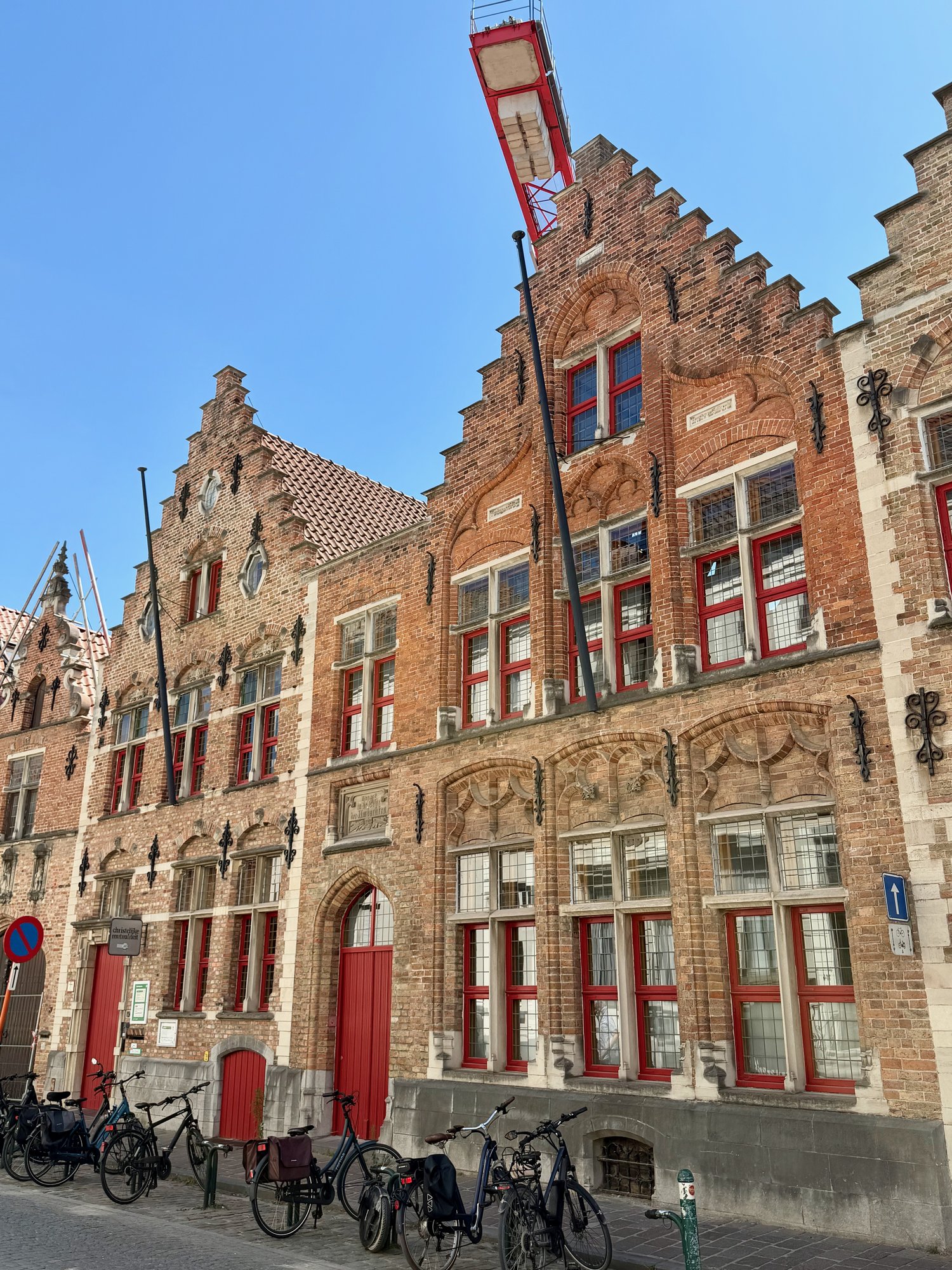
You can find all kinds of gorgeous buildings in the quieter streets off the main tourist roads. Bruges can definitely be busy with tourists at high season!
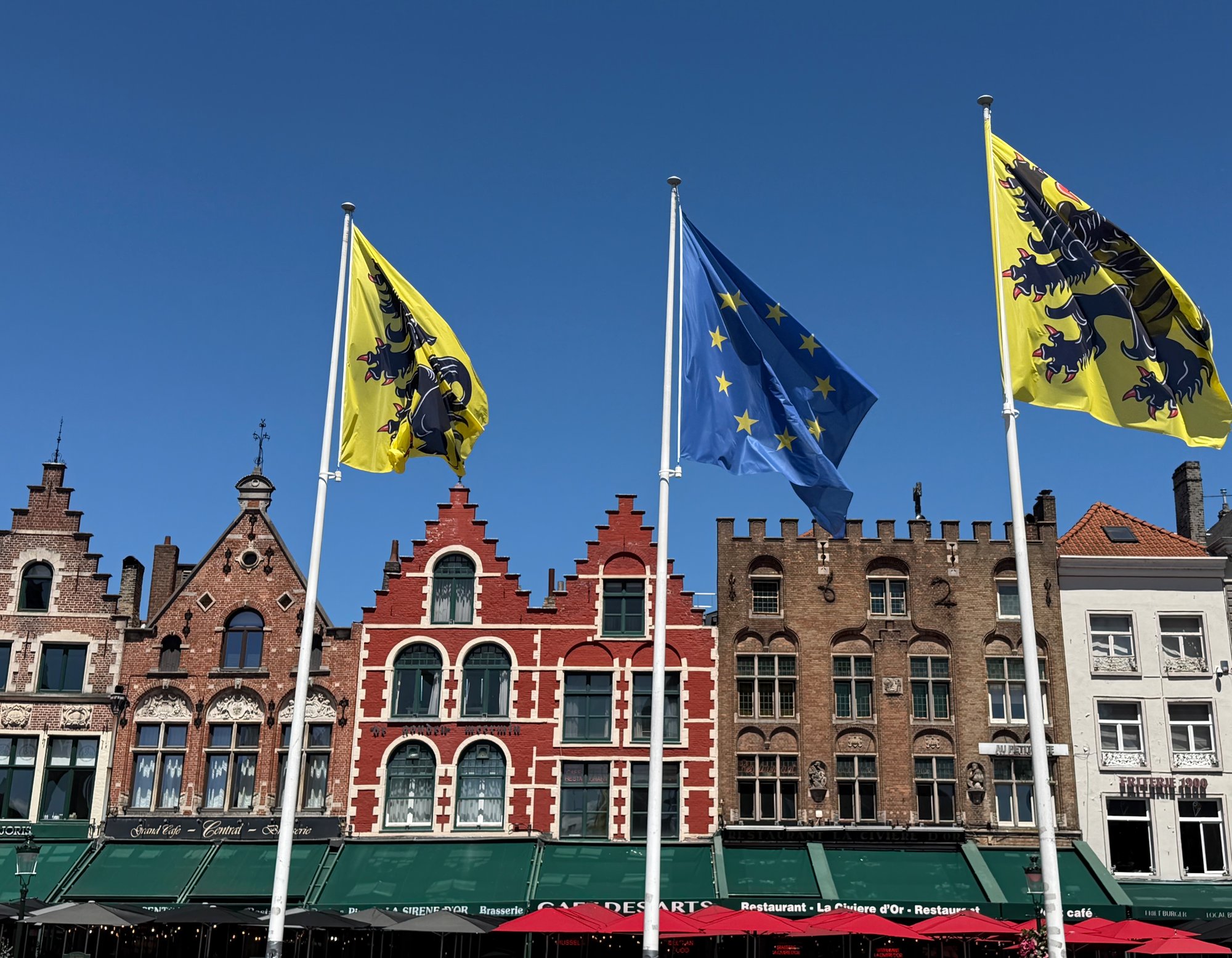
The Markt
On the Markt, the main market place, the lion of Flanders flies over the coloured guild houses, and the neo-Gothic Provincial Court fills the north side, rebuilt after a fire in 1878 and only opened to the public in 2024. The blue flag is for the European Union.
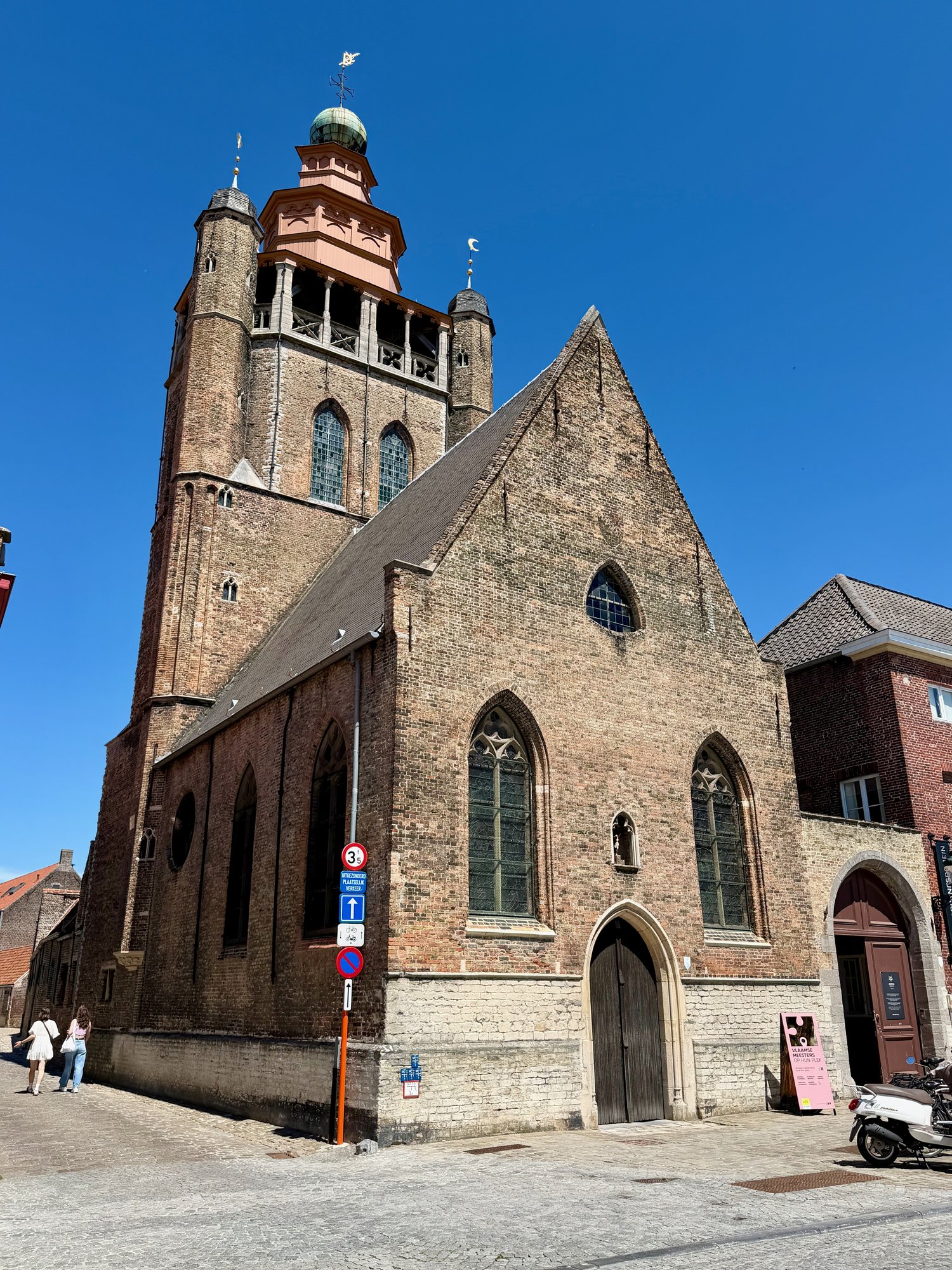
The Jeruzalemkerk and a relic of the True Cross
The Jeruzalemkerk in the quiet Sint-Anna quarter was one of the reasons I came to Bruges, it’s well off the beaten tourist track, a little walk from the centre, and it exceeded expectations so it is well worth a visit.
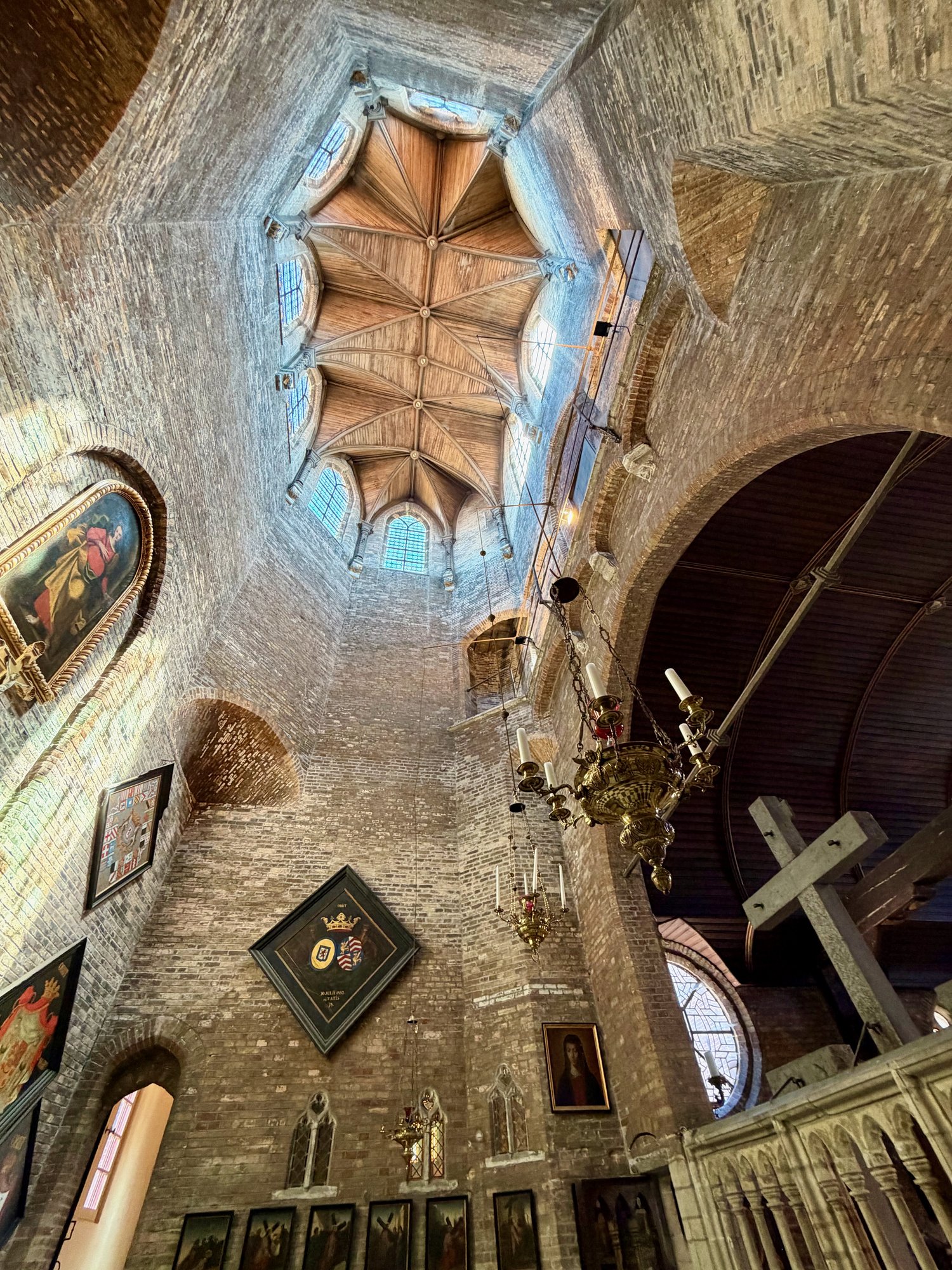
This is still the private chapel of one family. The Adornes, merchants of Genoese origin, built it in the fifteenth century as their own copy of the Church of the Holy Sepulchre in Jerusalem, and the seventeenth generation of their descendants still owns it. The tower is topped not with a cross alone but with a copper orb, and the side turrets carry a gilded crescent moon and a radiant sun, a skyline borrowed from the Holy Land.
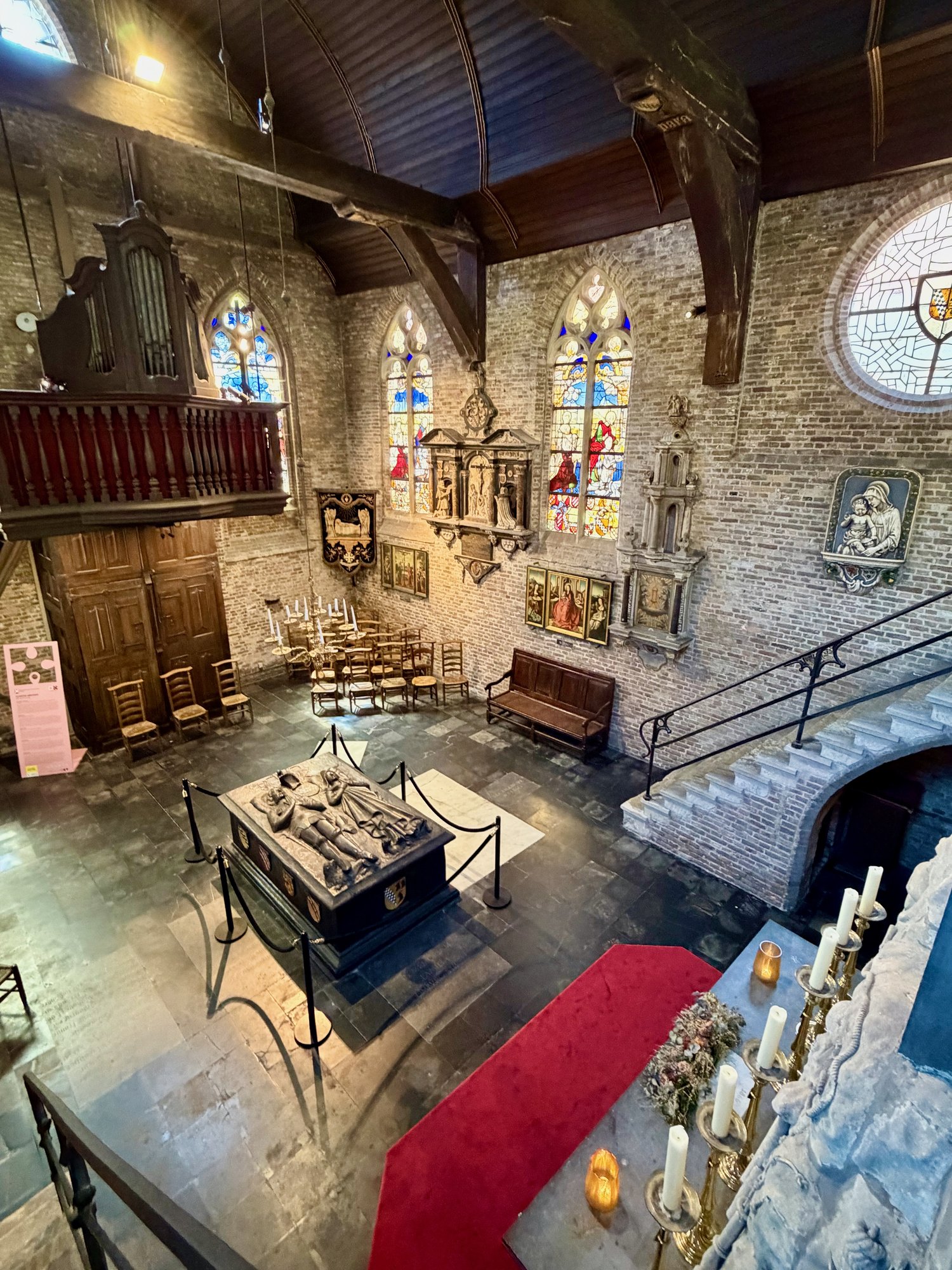
Anselm Adornes made the pilgrimage to Jerusalem in 1470, then rebuilt the family chapel in the image of what he had seen. He was murdered in Scotland in 1483, and only his heart came home, buried in the black stone tomb he shares with his wife Margareta van der Banck, who lies beside him in carved effigy.
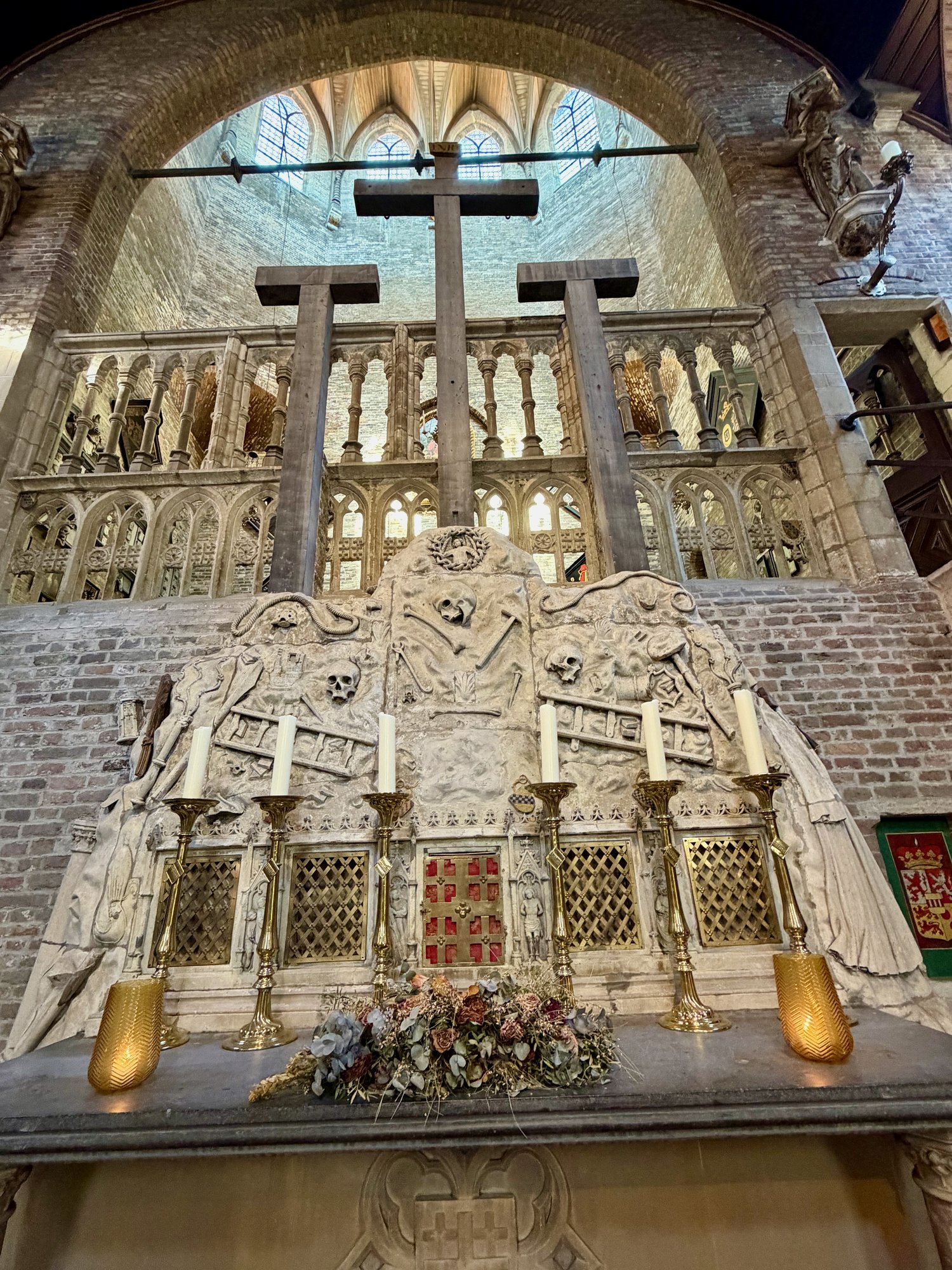
A Golgotha carved from pale limestone around 1485 rises behind the altar table, heaped with skulls, bones, ladders, hammers, and the other instruments of the Passion, with three plain wooden crosses standing above it against the bare brick.
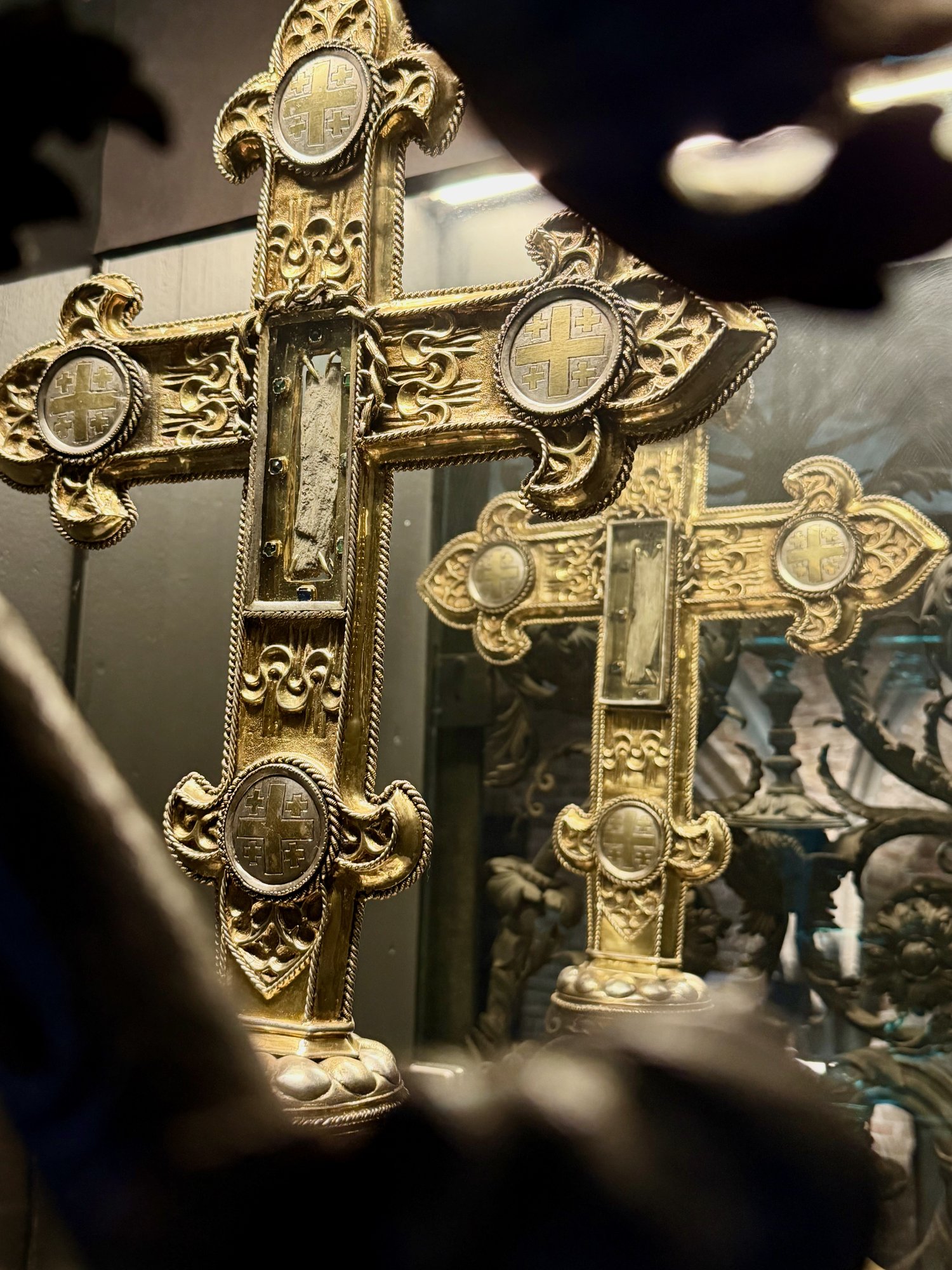
The chapel behind the altar holds a relic of the True Cross in a gilded reliquary cross from around 1500, set with Jerusalem crosses and a rock-crystal window over the fragment itself. A mirror behind the case shows you the reverse. There’s no fanfare or big signs so you have to know it’s there.
Behind the altar, a low crypt contains a replica of the tomb of Christ. As the estate’s own website puts it, this is “a piece of the Middle East in the heart of Bruges.”
The Basilica of the Holy Blood
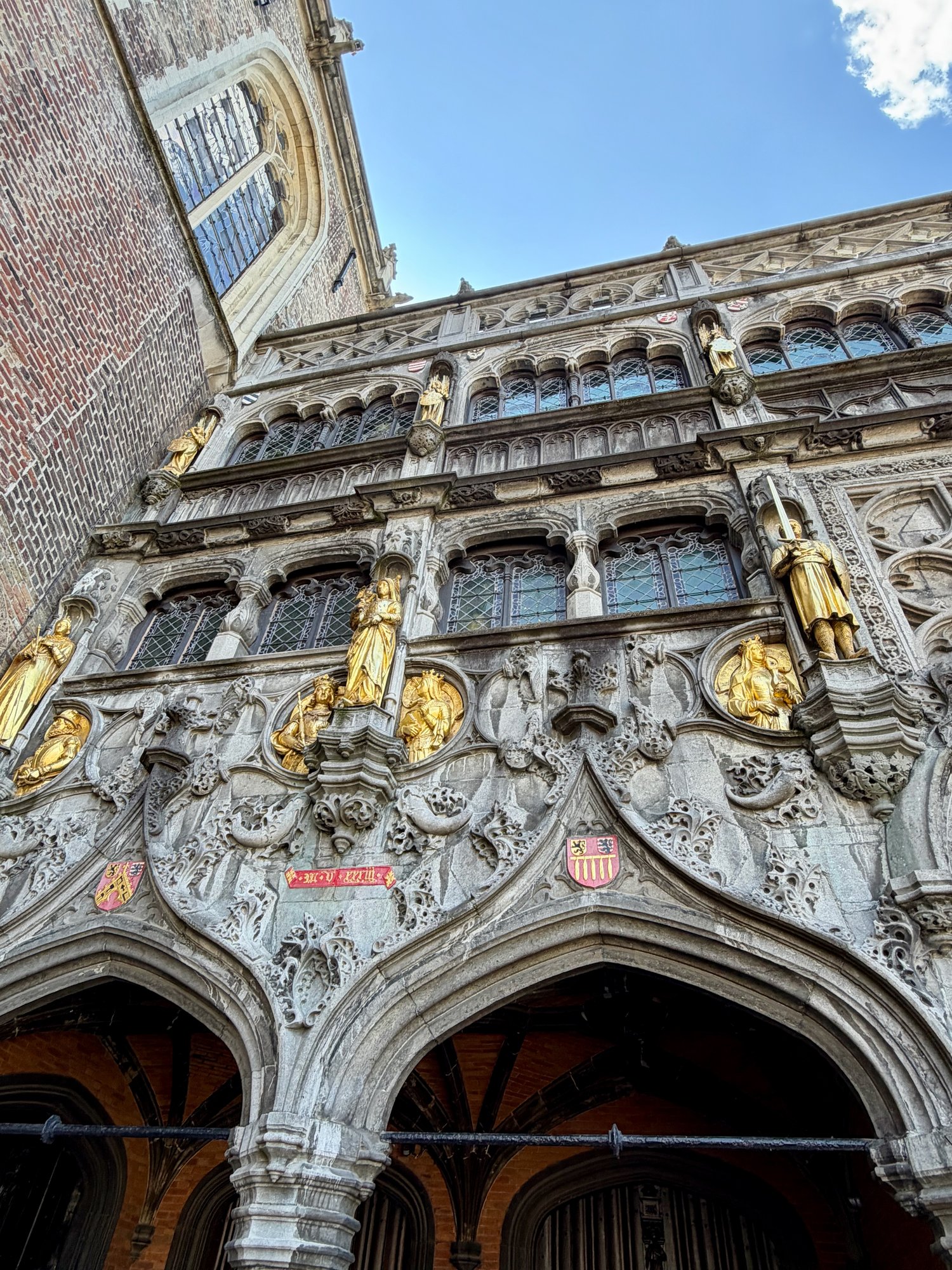
Back in the centre, on the corner of the Burg where the Counts of Flanders held power from the ninth century, the Basilica of the Holy Blood hides behind a gilded staircase facade, a nineteenth-century reconstruction of the one first built in the 1530s.
The lower chapel of St Basil, from the twelfth century, is what the basilica calls the only completely preserved Romanesque church building in West Flanders, all bare stone and silence. The upper chapel, rebuilt in the nineteenth century, glows with colour and is where the relic is held. You may have to queue for a long time, as I did, but it was worth it.
The basilica’s treasure is a rock-crystal phial said to contain cloth soaked with the blood of Christ, preserved when Joseph of Arimathea washed the body after the Crucifixion. Tradition says the Count of Flanders brought it back from the Second Crusade in 1150, though the basilica itself now says the story was invented by a fourteenth-century monk, and historians link the relic to the sack of Constantinople in 1204.
Either way, it has been venerated in Bruges for more than 700 years, and every Ascension Day it is carried through the streets in the Procession of the Holy Blood, recognised by UNESCO as intangible cultural heritage.
The relic is brought out for veneration every afternoon, and I queued upstairs and walked past it, close enough to see the phial in its glass cylinder. There’s no photography allowed. People come to pray, and the religious atmosphere was palpable. A priest sat beside the relic, watching each person pause before it. Whatever the phial actually holds, seven centuries of belief have their own weight.
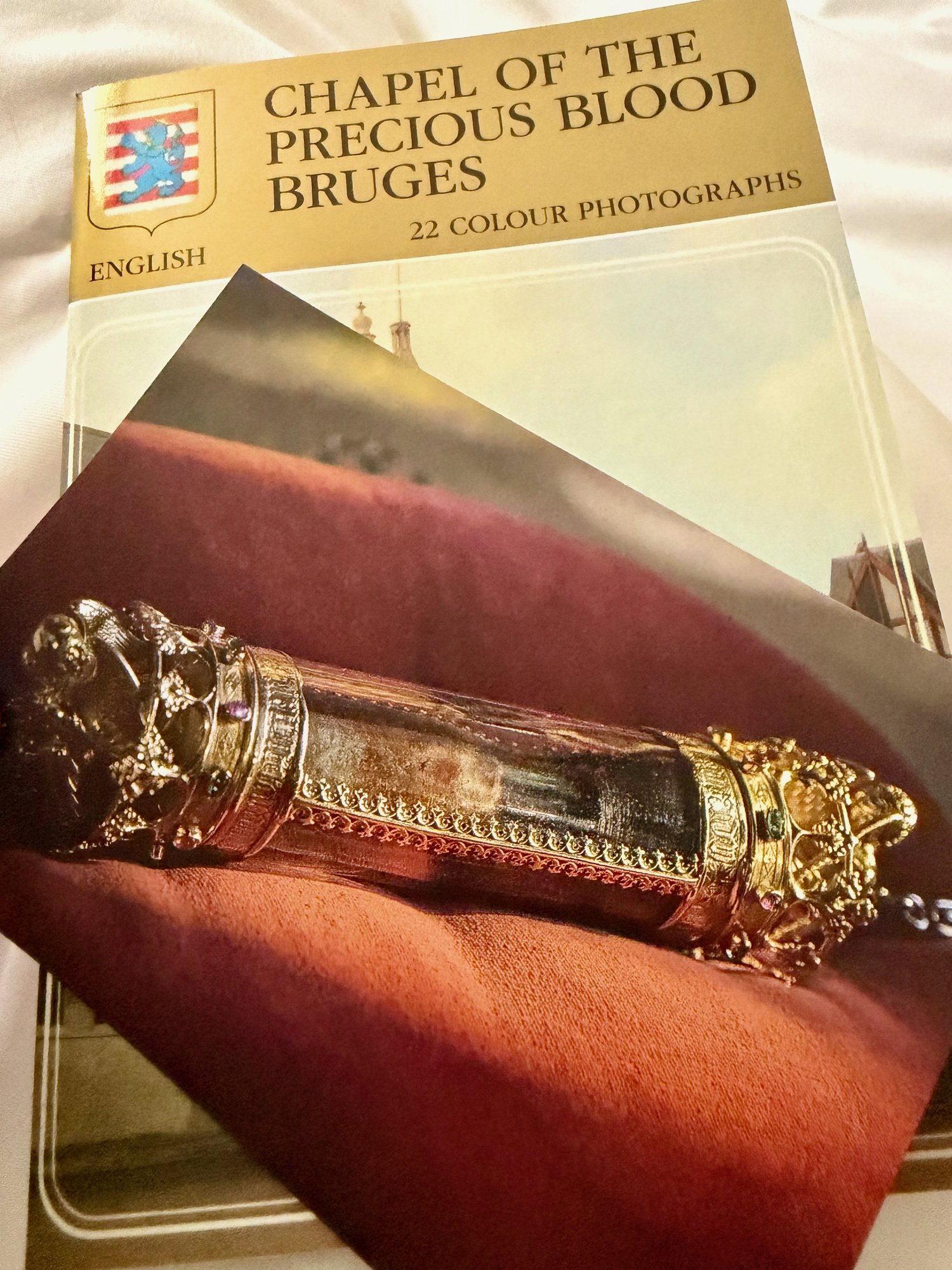
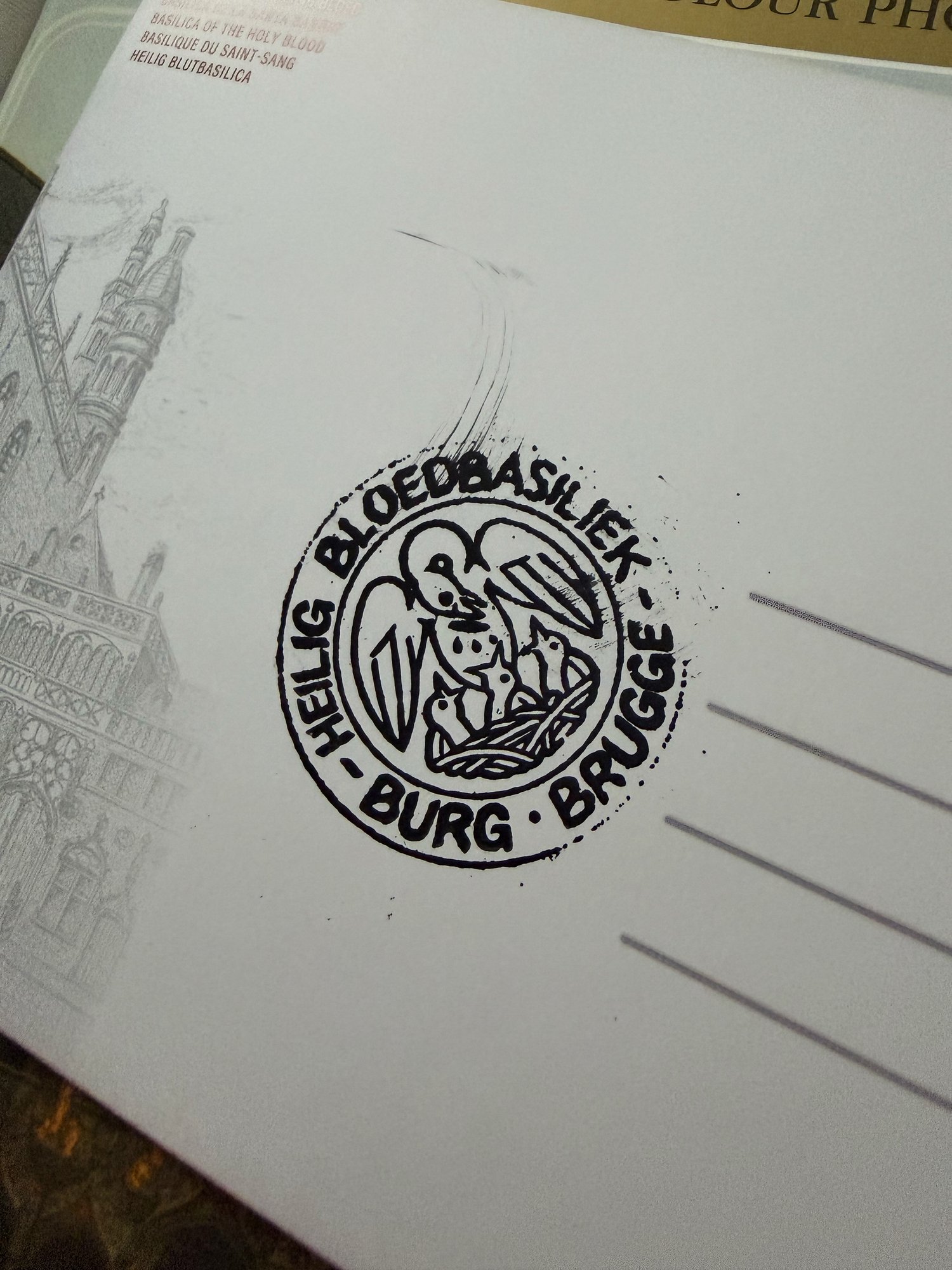
I bought the guidebook and a stamped postcard with the basilica’s pelican, the old symbol of Christ feeding his young with his own blood.
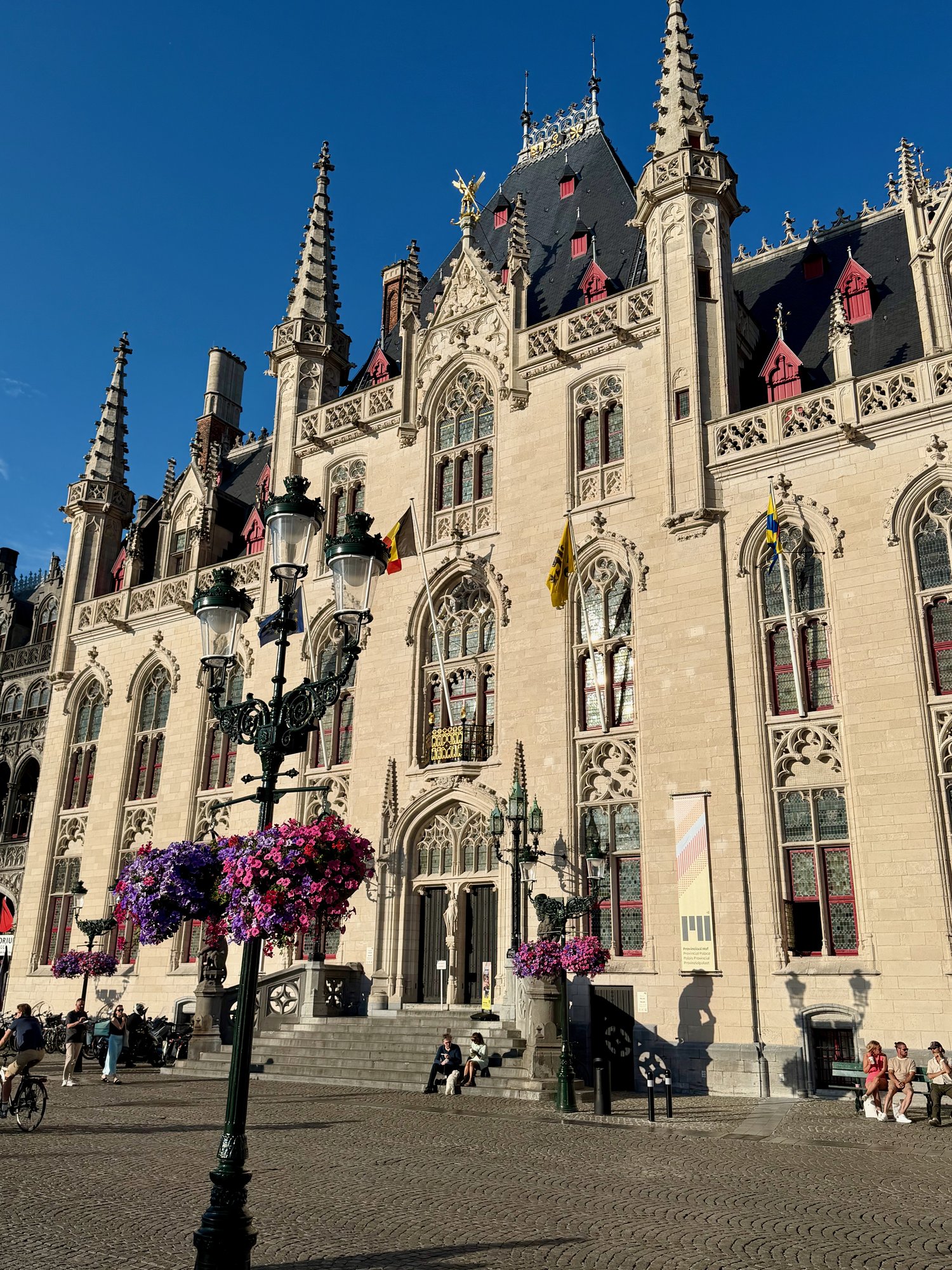
In the evening the tour groups thin out, the light turns gold on the Markt, and Bruges briefly belongs to the people staying overnight. If you visit, stay at least one night for that hour alone.
On the water: the Bruges canal trip
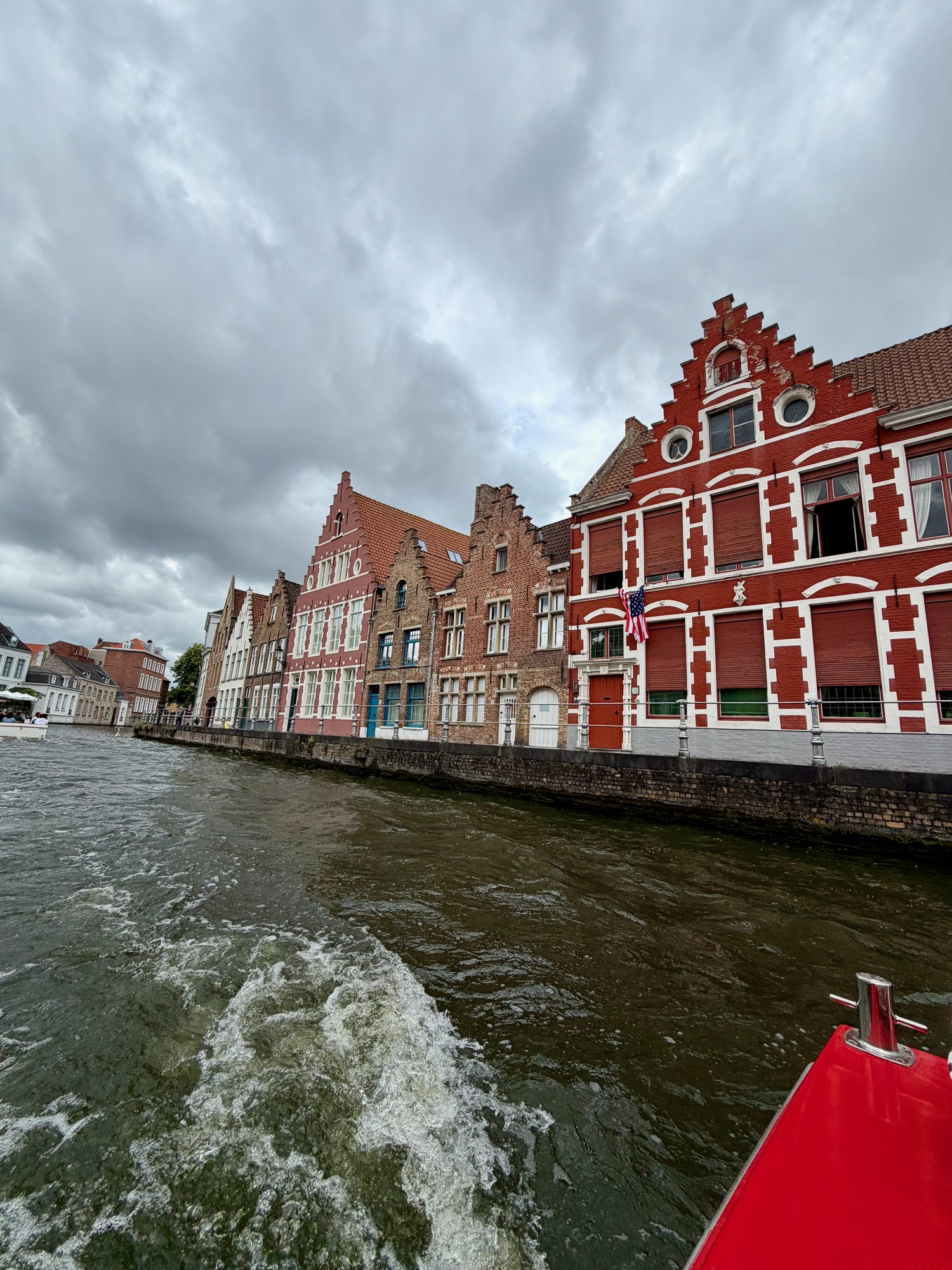
The next morning we joined a canal boat trip, definitely a highlight of the whole weekend as you can see a different side to the city. The price is fixed and reasonable for all the companies so you won’t have to queue long at one of the many central jetties.
Bruges was built by and for the water, and the boat shows you the city the way it was designed to be seen, gables and bridges and gardens leaning over the quays.
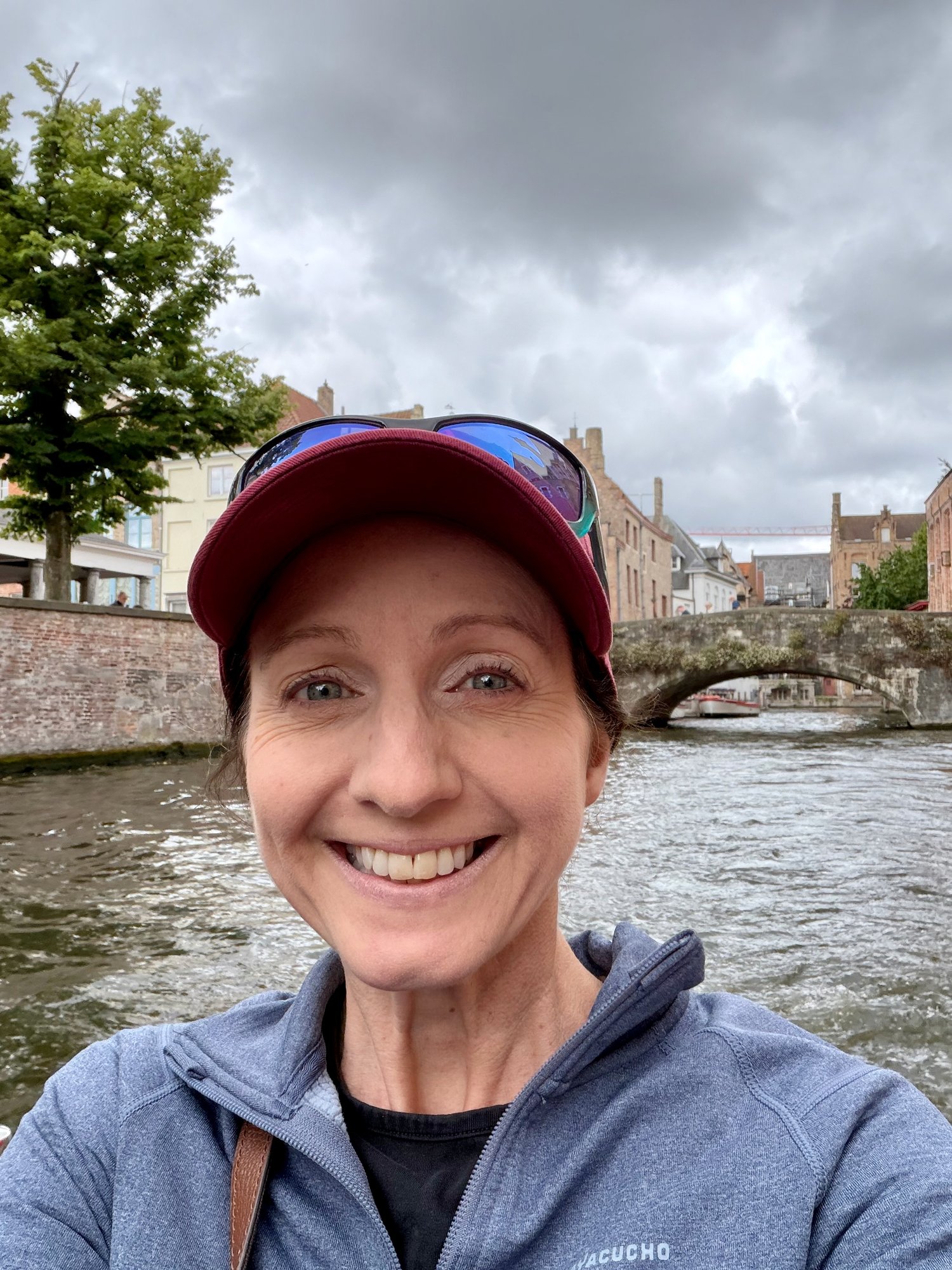
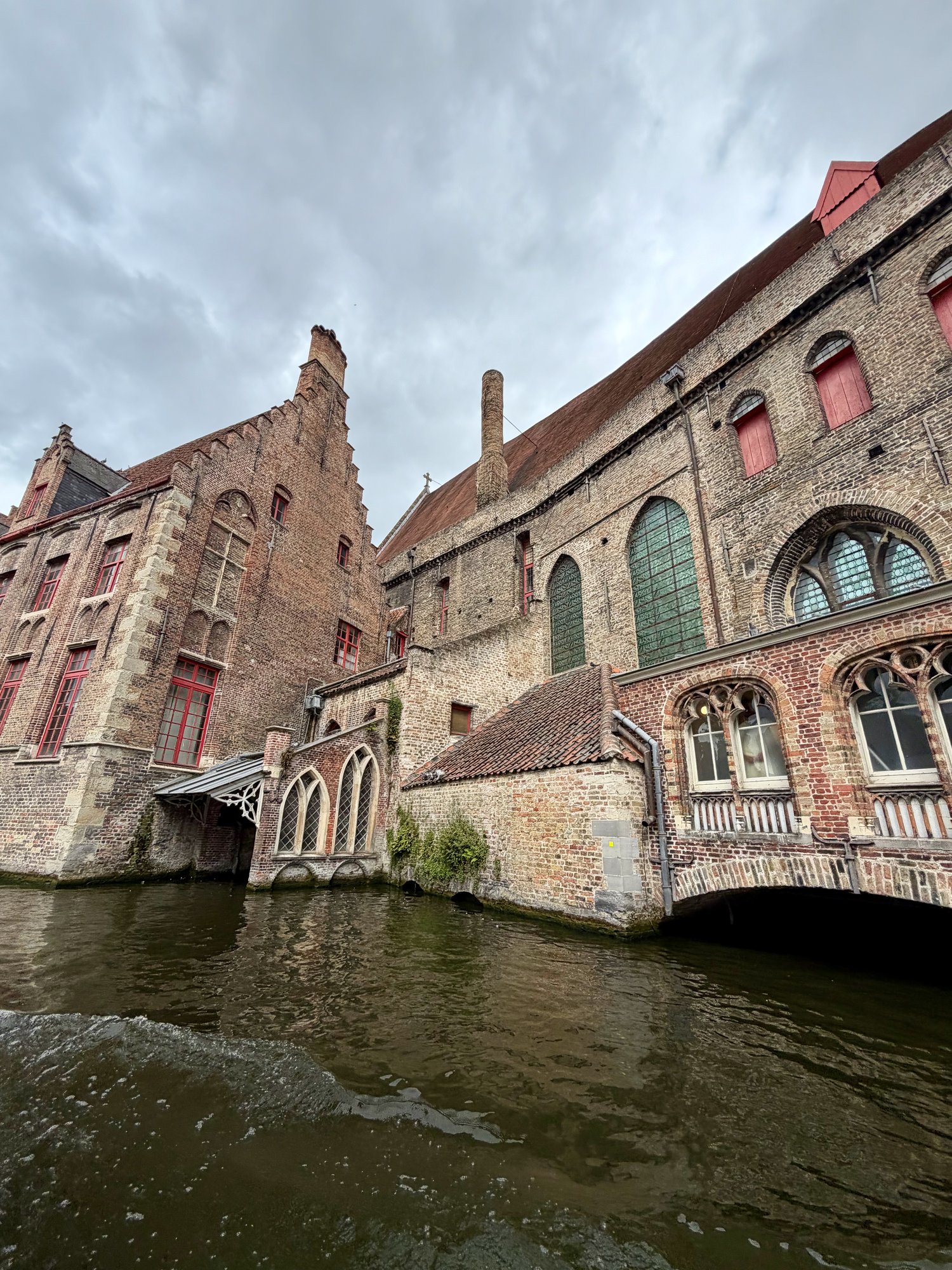
The boat slides right under the walls of Old St John’s Hospital, among the oldest hospital buildings in Europe, founded in the twelfth century and now home to Museum St John’s Hospital with its collection of works by Hans Memling.
From the water, the medieval wards rise sheer out of the canal, brick walls straight into the green water.
Afterwards we crossed the bridge over the Dijver, where a statue of St John of Nepomuk has stood since 1767. He was the Bohemian priest drowned in the Vltava in 1393 for refusing to break the seal of confession, and he became the patron saint of bridges. Vandals threw the statue into the canal one night in 1795. The city fished him out and put him back, though it took until 1811.
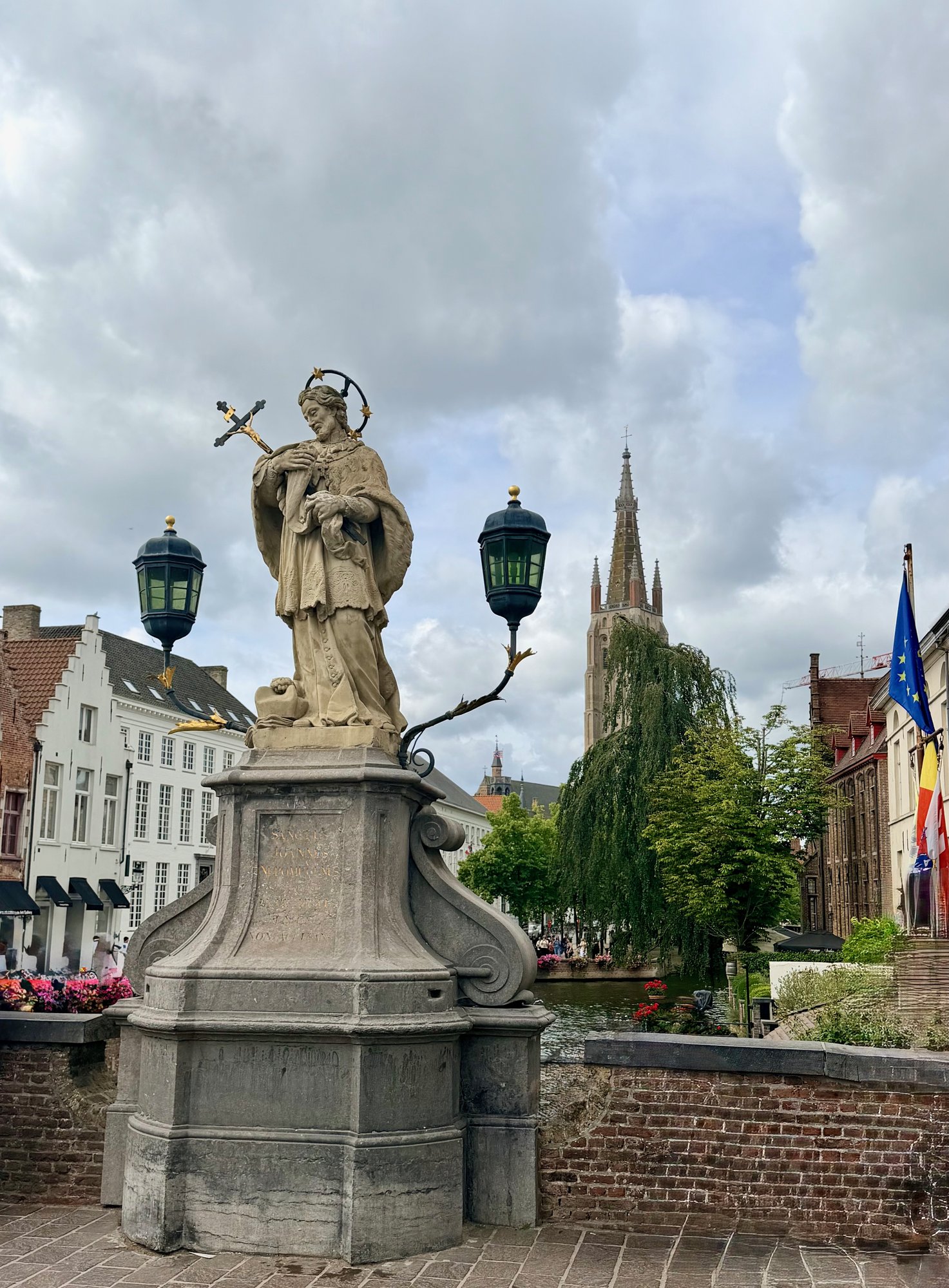
Behind him rises the Church of Our Lady, its brick tower 115.5 metres high, the second tallest brick tower in the world. Inside is Michelangelo’s Madonna and Child, the only sculpture of his known to have left Italy in his lifetime, twice looted and twice returned.
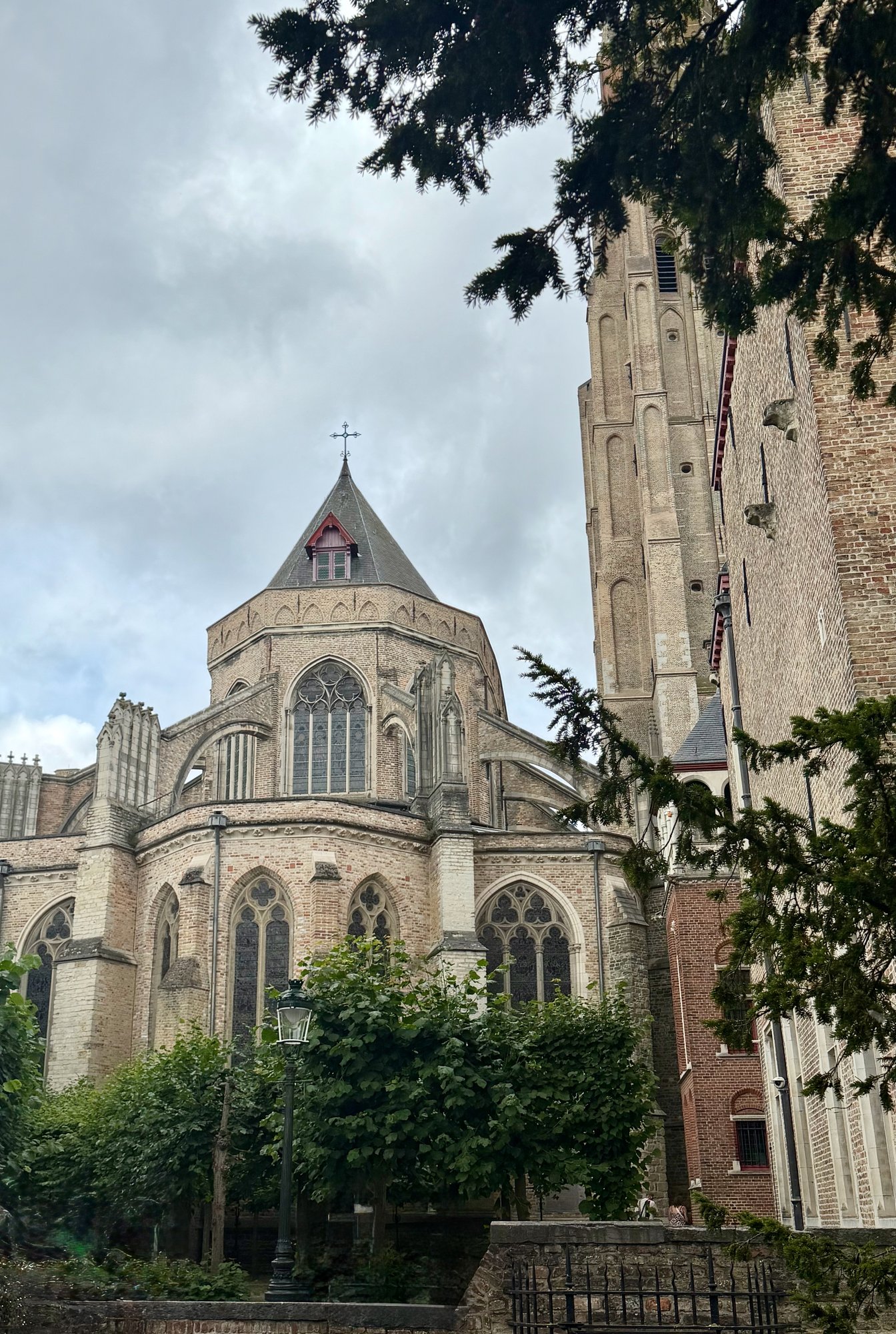
One day and a morning, one relic of the True Cross, one phial of Holy Blood, and more skeletons than I can count. Bruges is my kind of city!
Books about or set in Bruges
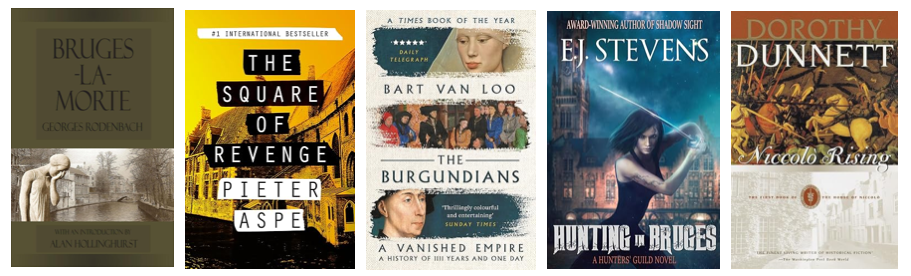
Bruges-la-Morte — Georges Rodenbach. Hugues Viane has buried his young wife and buried himself with her, wandering the misty quays and silent canals of Bruges, a city as grey and grief-stricken as his own heart. Then he glimpses a dancer who is his dead wife’s exact double, and obsession begins its slow, fatal work.
The Square of Revenge — Pieter Aspe. When the shop of a prestigious Bruges jeweller is broken into, nothing is stolen. Instead, the priceless stock has been dissolved in acid, and a strange square of paper left behind. Enter Inspector Pieter Van In, a hard-drinking detective with every bad habit going and an instinct for the rot beneath the city’s picture-postcard surface.
The Burgundians: A Vanished Empire — Bart van Loo. For a dazzling century, the dukes of Burgundy ruled the richest lands in Europe, and Bruges and Brussels were among the great commercial and court cities of their vanished empire. Bart van Loo tells the story with the pace of a thriller: ambitious dukes, murdered rivals, mad kings, spectacular feasts, and the painters Jan van Eyck and Rogier van der Weyden creating unforgettable art amid the intrigue. A phenomenon across Europe, this sweeping narrative history explains how the medieval splendour you see in Bruges today was built, and how it all came crashing down.
Hunting in Bruges — E. J. Stevens. Being shipped off to Belgium sucks. The medieval city of Bruges is quaint, but the local Hunters’ Guild is understaffed, the canals are choked with dead bodies, and there’s no shortage of supernatural predators as likely suspects. On second thought, maybe Bruges isn’t so bad after all. With a desire to prove herself, protect the innocent, and advance within the ranks of the Hunters’ Guild, Jenna Lehane hits the cobbled streets of Bruges with blades at the ready.
Niccolò Rising — Dorothy Dunnett. Bruges, 1460. Jousting is the genteel pastime, and successful merchants are, of necessity, polyglot. Street smart, brilliant at figures, adept at the subtleties of diplomacy and the well-timed untruth, Dunnett’s hero rises from wastrel to prodigy in a breathless adventure that wins him the hand of the strongest woman in Bruges and the hatred of two powerful enemies.

Leave a Reply